Morgan Caplan
Senior Communications Manager
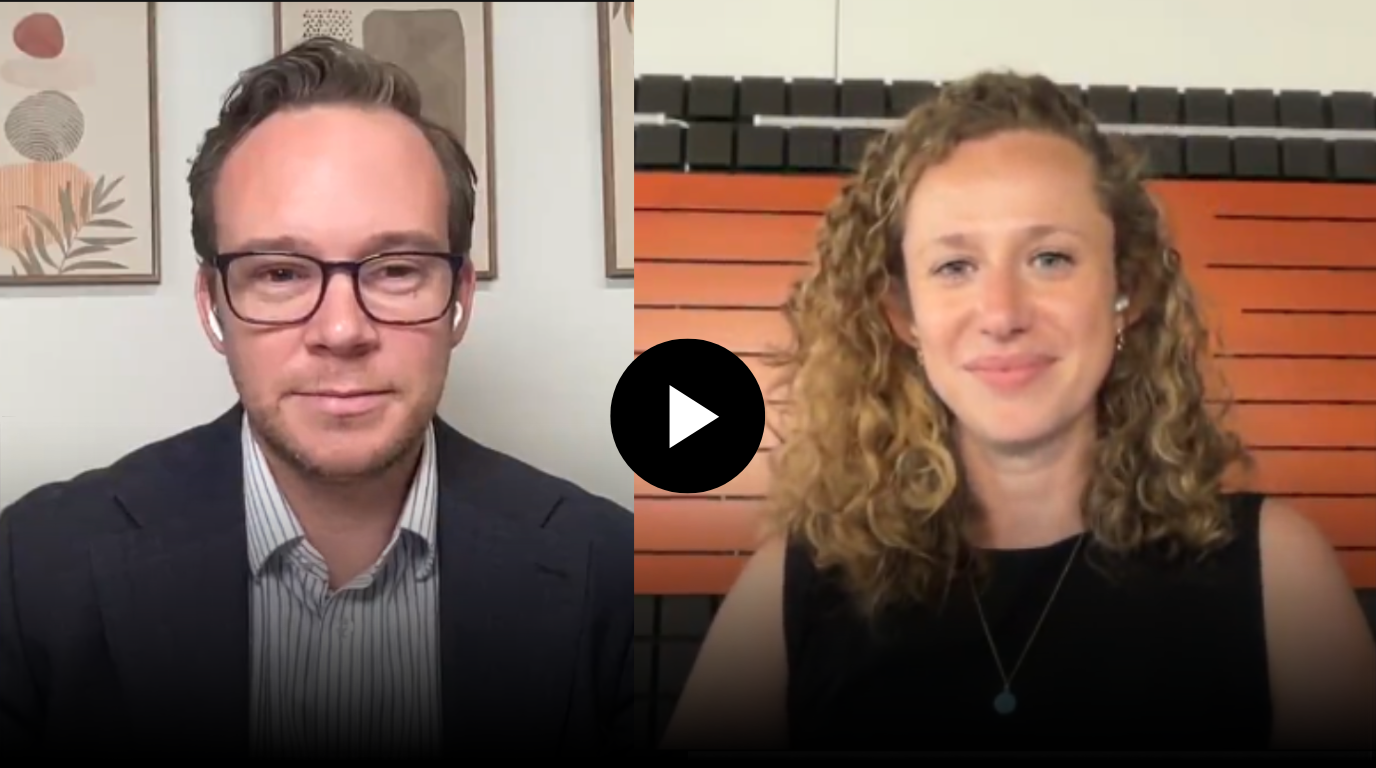
We’re thrilled to welcome Ella Nilsen as Echo’s newest Vice President. Ella joins Echo from CNN, where she was a distinguished climate and energy reporter for the last five of her thirteen years as a journalist. She brings a depth of knowledge on clean energy, climate and conservation policy, and she knows the politics too, having covered members of Congress on Capitol Hill and candidates on the campaign trail, including in New Hampshire.
Today we’re talking with Ella about her transition to communications, how she sees these issues playing out in the months and years ahead, and how clean energy leaders can navigate today’s complex political environment.
Chris Moyer: You spent your career as a journalist, most recently of course at CNN. What drew you to make the leap to public affairs with Echo, and what are you most looking forward to as you make this transition?
Ella Nilsen: I was very lucky to be a journalist for the last thirteen years. The thing that has always interested me the most, coming from some of the places I worked at in the past, is the intersection of politics and policy. I’ve covered both so closely, and I really think they inform each other so well.
So being in the clean energy world, covering the IRA, covering the implementation and then eventual dissolution of large parts of the IRA, I’m really fascinated to be able to dive into the clean energy space, the clean energy industry, because right now energy prices and energy affordability inform so much of what we’re talking about in politics, in policy, with electricity demand going up. I’m really excited to try to shape that conversation, because the ground is shifting under our feet so quickly. There’s just endless fodder to dive into, and endless opportunities to make people’s voices heard.
CM: So I’m curious what most interests you about clean energy and the politics of clean energy right now. Where do you see the most interesting debates happening, and over what issues?
EN: Certainly data centers are the big elephant in the room. It takes up a lot of the oxygen in the current debate, because electricity demand from data centers is really putting the US on a certain trajectory where it hasn’t been. At the same time, for many different reasons, we’re seeing people’s electricity prices skyrocket in every corner of the United States. I can tell you electricity prices are high in New England. I know they’re getting higher in DC and the mid-Atlantic states. At the same time there’s this big debate about how do we supply that electricity, is it natural gas, is it renewables. There are so many debates around exactly what path we chart here, and the consequences for the climate and for people’s day-to-day prices are pretty enormous.
CM: I’m curious about the politics here. How do you see the issues of rising energy bills and affordability that you were just describing playing out in the midterms in November, and then on the presidential campaign trail, which is going to start basically as soon as the midterms are over?
EN: Looking back at the gubernatorial races last year in Virginia and New Jersey, that was the first time, in clean energy spaces and among clean energy reporters, it’s a bit of a bubble, we were talking about rising electricity prices in our own little world. That was the first time, in New Jersey, in Virginia, and then the Georgia public commissioners race was another fascinating example of this, where the politics around electricity prices really exploded and political reporters started taking notice of it. But there are some really interesting things happening in individual states. New Jersey just passed a raft of legislation that is attempting to lower people’s electricity bills in some way. Same thing in Virginia and some other states.
I think there is a really interesting policy laboratory at the state level, because of the lack of any meaningful legislation on the federal level trying to get its arms around this problem, states are really leading the way on this. We’re certainly seeing this play out in the midterms as well. As soon as midterm campaign season is over and presidential campaign season starts, a lot of campaigns, probably on both sides of the aisle, are going to be looking to states to see what policies worked, what policies didn’t work, and how that’s going to inform the larger presidential election debate.
CM: You spent over a year providing deep, dedicated coverage of the Inflation Reduction Act, how it was passed and then the implementation of it. What was your biggest takeaway from tracking that landmark legislation, and how will that experience shape the advice you give clients who are navigating federal policy?
EN: As I was covering the ups and downs of the IRA, and there were many ups and downs throughout the entire process, once the bill was passed and signed and being implemented, again there’s a little bit of a bubble in the climate and energy space. Everyone in DC who works on these issues was really engaged, really talking about it, and it was a huge deal, there were billions of dollars going to these new clean energy programs, potentially transformative investment in factories and jobs. And then I would talk to my friends who read the news but aren’t as plugged into this world, and they had no idea any of this was going on, it was not even a blip on their radar.
So my big takeaway for the next time around, if there is a next time, is that policymakers who are able to pass transformative bills like these really need to own it, and really need to make sure they’re not just going to traditional media, they’re going to podcasts, online, social media, all this stuff, really trying to get it out there any way possible. And obviously the implementation of some of this stuff was pretty slow, which certainly led to the Trump administration being able to pull some of it back maybe more easily than they otherwise would have. The other thing I’d say that’s really interesting is the theory behind the case in the IRA was clean energy equals jobs, and that was a huge thing pushed by former President Biden’s administration, totally understandably. But looking at the policy landscape moving forward, people are really cognizant that in addition to clean energy jobs, people really need relief on their monthly bills at home. So how can policymakers make these clean energy benefits more tangible for everyday people who are just trying to get by?
CM: So if you’re a company or a nonprofit that is advocating, putting yourselves in their shoes, how can you help with that? We’ve seen a lot, take the wind industry for example, it’s been a tough go for the last year and a half for wind companies, and I think the response we’ve seen is they just don’t want to talk to reporters, don’t want to offer comments, hard to say how much they’re working the stories even off the record. What would you advise those communications professionals, the CEOs, anyone in an executive role at one of these companies?
EN: My advice is to engage, at all. Try to shape the story. I completely understand the reticence and hesitancy to even talk about it, I understand people are trying to keep their heads down in the current environment. But at the same time, it is leaving so much on the table potentially, in terms of shaping the story and shaping the narrative. If you don’t engage, and reporters just aren’t hearing back from you, or just getting nothing from you, I think it damages you in the short term, you don’t have a voice in the debate at all, and that’s a lost opportunity. But also down the road, if the policy landscape changes, you want to be able to have a credible base with reporters, and there is a bit of give and take there.
CM: Yeah, certainly. If you don’t tell your story, then someone else will, and it’s not going to be the way that you want it told. And so finally, our last question, what is something about you that might surprise our audience?
EN: Maybe this isn’t quite a surprise, because I feel like I probably talk about it too much, but I am from New England, and I’m a big hiker. Last year on my honeymoon I hiked Slovenia’s tallest mountain, which stands at over nine thousand feet. We really lucked out and had an incredible view of, I think, Austria and Italy from the summit of this mountain. So if you are not seeing me doing work on clean energy policy, you might see me hiking in any number of New England’s beautiful backwoods mountains.
CM: Ella, we’re really grateful to have you on our team. Excited to work with you, and thank you so much for joining us today.
EN: Thank you so much for having me.
Check out our recent conversations:
WATCH: Solar’s Journey From ‘Brink of Extinction’ to Manufacturing Renaissance
Echo’s Interview with Gov. Wes Moore
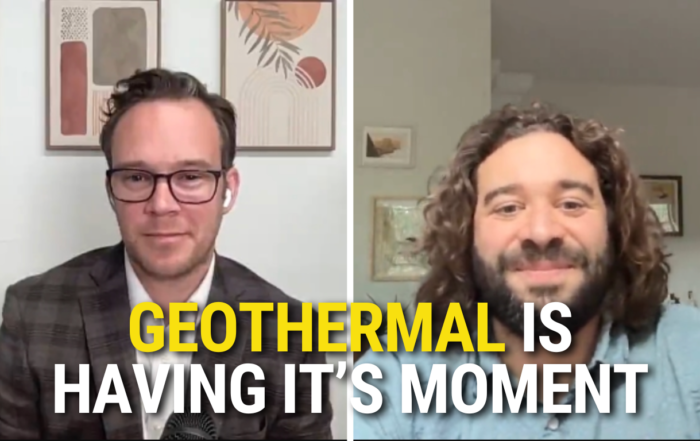
WATCH: Mike O’Connor on the Mountain West Geothermal Consortium & the Case for Faster Deployment
Sign up for our newsletter
Receive updates on our work, industry news, and more.