Morgan Caplan
Senior Communications Manager
After a global pandemic, conflict in the Middle East, and countless weather-related disasters, it’s become increasingly clear that domestic manufacturing supply chains are a business and geopolitical imperative. It’s against that backdrop that Qcells announced its latest project: the first fully vertically integrated solar facility in the country, in Cartersville, Georgia. It’s a $2.5 billion bet that, together with the company’s Dalton plant, is expected to reach roughly 8.4 gigawatts of annual capacity and employ close to 4,000 Georgians by the end of the year.
It’s landing at a critical moment—one year ago, Congress repealed the Inflation Reduction Act tax credits that helped spark this manufacturing boom. Few people have had a closer view of that whole arc than today’s guest, Scott Moskowitz, Vice President of Market Strategy and Public Affairs at Qcells. Scott has spent nearly a decade at Qcells and helped Senator Jon Ossoff’s team craft what became the solar manufacturing credits in the IRA. In January, he was elected chair of the Solar Energy Industries Association’s board.
Today we’re talking with Scott about how he got into the solar industry, why building a domestic supply chain matters more than ever, and what the US solar industry is fighting for now that the IRA tax credits are largely gone.
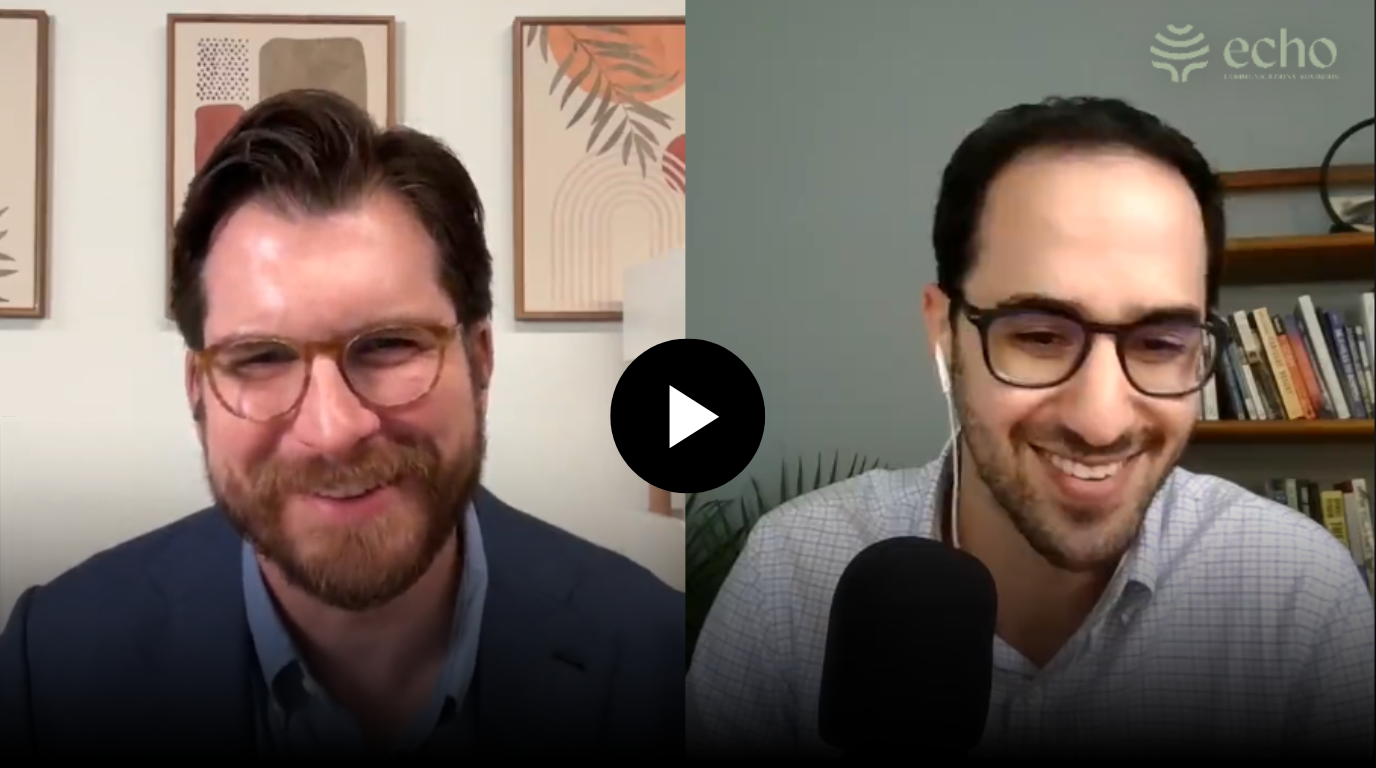
Dan Crawford: You’ve been at Qcells since 2018, which is before solar became the political football that it is today. How did you get into solar, and what pulled you toward the policy side of it?
Scott Moskowitz: Interestingly enough, I’m an environmental engineer by education, but I never ended up working as an engineer. I started out as a consultant doing market research and strategy work for pretty much every clean energy company you can think of.
I joined Qcells in 2018, largely to do that type of work—business development, general strategy. But as an analyst, I had a fundamental perspective on understanding the influence of policy on the market. That became really pressing in 2020, when the pandemic started, but I’d really been tracking and understanding the geopolitics of our industry even before that, and how a lot of the success on the deployment side is tied to manufacturing and supply chains.
When I came here, we were in the middle of building our first factory in Georgia. At the time it was the largest investment in solar manufacturing in US history—it was eventually dwarfed by what we’re now doing in Cartersville. Because we were the largest company doing that, we found ourselves needing to advocate and support ourselves from a policy basis, and I just jumped into doing it and have been doing it ever since.
DC: You were just elected chair of SEIA’s board—you’re taking the reins at a tough moment for the industry. What do you most want to get done?
SM: I think for all of us, we’re mostly intent on recognizing and taking advantage of the fact that we have load growth in the United States at a meaningful level for the first time in decades. We have an affordability crisis of which electricity is a key part, and we have a technology in solar and storage that’s a solution to that problem. It’s the fastest and cheapest technology to deploy, it’s demonstrated to lower costs, and it can be done at any level—residential, commercial, and utility—because unlike pretty much any other energy technology, it’s totally modular.
We’ve had a bruising year and a half, but that’s largely the nature of partisan politics and how these bills have been passed. At the end of the day, I view this technology as completely nonpartisan—this is not a political issue, it’s a technology issue. We have the tools available to address the affordability crisis while meeting load growth with solar and batteries. For us, and for SEIA in general, it’s really about sharing that message and depoliticizing what’s become needlessly political, so we can get the things we need as an industry to accelerate deployment—permitting reform, more investment in manufacturing, making sure all the states have minimal barriers to installing and supporting solar and storage as fast as possible.
DC: I want to talk about the politics and how you appeal to folks on both sides of the aisle. One thing that has a lot of bipartisan appeal is domestic manufacturing. For folks who might not be familiar with that concept [a fully vertically integrated solar factory], why does that matter? What’s the case for making everything in one place instead of importing from across the globe?
SM: The solar panel supply chain has four pieces: polysilicon, wafer, cells, and modules. Historically, the US has had a pretty significant volume of polysilicon production, and over the last ten years we’ve had a fair amount of module assembly capacity. It’s really the pieces in between—cell and wafer—that have created distinct bottlenecks, which created challenges during the pandemic and after the passing of certain policies. By making those two particular components, cell and wafer, in-house, we can show customers that we can deliver on time and that every aspect of what’s in that panel is traced. In our industry, that’s the kind of certainty customers need.
Ten years ago, we were on the brink of extinction in the US. As an industry, we clawed back from that pretty significantly to where we are now, which is the second stage. We’re scaled at certain parts of the market and fully self-sufficient in the US in terms of getting modules. If you install a solar panel in the United States, there’s a really good chance it was at least assembled here.
The third phase would be a market that’s fully self-sufficient across modules, cells, wafers, and poly—we’re not quite there yet, so there’s still significant opportunity to invest. And aspirationally, the fourth phase is having enough capacity that we’re not just supplying ourselves but globally competitive, deploying product around the world like we do in other industries. That’s a tough goal, but I think there’s a lot of opportunity to keep attracting new investment.
DC: That’s great, and it’s a lot of jobs too—about 4,000 in Georgia between Dalton and Cartersville. Georgia is a purple state. Are you emphasizing the jobs, energy security, supply chain independence, or is it all of the above?
SM: All of the above, for sure. From a manufacturing perspective, manufacturing jobs have a tremendous community impact because they’re permanent and place-based, and they have multiplier effects—for every job you create in the factory, you’re typically creating three to four more in the community that supports it.
Module assembly was the start, and it’s drawn what we’ve been able to do in Cartersville with cell and wafer. A sister company of ours, Hanwha Advanced Materials, which makes EVA—the film that laminates cells together inside a solar panel—built a factory next door to ours in Cartersville, and it supplies us and other solar companies around the country. It’s an emerging ecosystem that resonates with folks from an economic development perspective, a political perspective, and an economic security perspective, given that these panels are made here in America. Qcells is a Korean-German company, so there’s an energy security story to it as well.
DC: How has the repeal of the IRA tax credits affected the value proposition for manufacturing solar in the United States? And to put your SEIA hat on — what is the solar industry advocating for on those tax credits? Do you want to see them restored the same way as before, or is there a third way you’d like to move forward—not quite full restoration, but not where we are now either?
SM: To speak to the popularity of manufacturing in particular, it’s notable that within the Inflation Reduction Act there were a couple of things passed. There’s obviously the ITC extensions and reframing them as tech-neutral, but then you had adders onto them, in particular domestic content. On the supply side, you had the 45X manufacturing incentive—the Solar Energy Manufacturing for America Act, as it was introduced by Senator Ossoff. The ITCs were pulled back significantly—25D went away at the end of last year, and the other credits have already sunset, except if you have product safe harbored, which gives you a four-year window to install. That’s meaningful, and you’ve seen pretty significant impacts right away in the residential market in particular. But on the supply side, it’s worth noting the 45X manufacturing credits weren’t even touched—I think that’s one of those policies that has pretty distinct bipartisan support at this point. We’ve seen SEIA and others be openly supportive of those tax credits and whether it’s possible to extend them later.
Permitting reform is obviously really important. Tax credits on the deployment side are still where there’s a lot of discussion in the industry, and a lot of it’s going to come down to politics—what happens in the midterms, what happens in the next presidential election, whether a tax extenders bill moves. There’s a lot of contingencies in terms of what’s achievable. But in general, there’s an understanding and appreciation that tax credits have been an effective tool at accelerating deployment and keeping costs low. Solar people regularly point to the fact that solar is the cheapest form of energy in most places around the world, but those tax credits have done a good job leveling the playing field over time, accelerating deployment and keeping energy prices low for customers. As a manufacturer, we really supported the domestic content bonuses—I think that drives a lot of demand. We think it would be good policy long-term to make sure those domestic content bonuses stick around, because they could draw the additional investment that’s needed, particularly on the cell and wafer side.
DC: Looking ahead—let’s say policymakers get the policy environment just right, the economy continues to grow, and your factory and others are running at full tilt. What does a healthy American solar industry look like five years from now, and what do we have to do to get there?
SM: It’s funny, because this is where we talk about depoliticizing an industry that shouldn’t be political at all. What’s interesting is that the last two rounds of policy that impacted our industry were both passed on a partisan basis through reconciliation—that’s just the nature of reconciliation. But historically, the ITC was always bipartisan—the investment tax credit had been around for decades, and the solar version of it was codified under George Bush in 2005, then extended under Obama and again at the end of the first Trump administration.
Our view is there’s a world where we can go back to these policies being bipartisan. Our industry is very supportive of an all-of-the-above energy strategy—we think there’s enough demand that there’s no need to discriminate among energy types, and solar and storage should be a critical part of that.
To your question specifically—what does a healthy industry look like? Our view is one that’s able to grow consistently and has a healthy, sustainable supply chain, meaning it’s diversified and as much domestically produced as possible. We think that provides some really strong political benefits too, given the benefits manufacturing has on communities and industries in general. The global leader in manufacturing solar panels is China, and they’ve also been one of the leaders in deploying solar—part of the reason is that their manufacturing drives their deployment, rather than the other way around. There’s an opportunity to do that here too.
DC: Last question, on a personal note—what’s something about you that might surprise our audience?
SM: It’s an interesting question—I think right now nothing surprises folks. It’s a busy industry, there’s a lot going on, and I’ve got three small daughters, so my life is just working and parenting these days. A fun fact: I was in the Peace Corps for a day, back when I was right out of grad school. I was on the verge of going to Peru for a couple of years, then met my now-wife and made a pretty dramatic decision—I was in staging for the Peace Corps and ended up coming back home and finding a new path. But I worked one day in the Peace Corps, got a $17 check from the US government for my time there, and the rest is history. I’ve been doing this kind of work ever since.
DC: Seems like it was the right decision.
SM: And my wife and kids would certainly agree—it worked out great.
DC: Scott Moskowitz, thanks so much for joining us on the Echo Chamber.
SM: Great to be here. Thanks for having me, Dan.
Check out our recent conversations:
WATCH: Solar’s Journey From ‘Brink of Extinction’ to Manufacturing Renaissance
Echo’s Interview with Gov. Wes Moore

WATCH: Mike O’Connor on the Mountain West Geothermal Consortium & the Case for Faster Deployment
Sign up for our newsletter
Receive updates on our work, industry news, and more.