Chris Moyer
Founder & President
Picked-up pieces while bracing for summer temps in DC in the coming days…
“Exciting” isn’t exactly the word to describe Tim Pawlenty’s selection as the new leader of the Solar Energy Industries of America this week, but it is interesting. The mild-mannered former Minnesota governor represents a Republican Party that no longer exists in Washington, so we’ll have to wait and see how he approaches the current political challenges facing the industry.
For clean energy to win more often than it loses in Washington, it must strike fear into opponents who dare to oppose it. I hope Governor Pawlenty approaches his leadership of SEIA with this in mind—which means, among other things, not giving campaign cash or other support to incumbents who vote against the industry in big moments, as they did on the IRA tax credits during reconciliation last year.
The worst thing the solar and storage industry could do is pretend that facts alone will win the day. If the industry can continue to adapt to the realities of how effective communication intersects with both culture and politics in 2026, it will better position itself to achieve bigger policy and regulatory wins—and stop crushing defeats—in the years ahead.
The erstwhile president, Abby Hopper, knew how to communicate in the current media landscape, including through LinkedIn. SEIA’s post announcing Pawlenty’s selection didn’t even tag him because he doesn’t appear to use the platform. Not that LinkedIn is everything—but it’s an early tell.
Chasing bipartisanship for its own sake didn’t work to protect the IRA tax credits. My hunch is this is how Pawlenty will approach the job, but I hope I’m wrong…
Two years ago, the conversation about data centers to power AI became ubiquitous in the energy world, and sentiment was neutral, if not slightly positive. Today, the broader public has become very familiar with data centers. The term has become a four-letter word in communities everywhere and has even brought partisan foes together to fight them.
In a recent episode of The Daily, a reporter highlighted the difference between the Chinese and American approaches to AI. China has focused much more on practical ways AI can improve daily life in the real world—teaching children a new language, improving transportation. Public support for AI is fairly high. Contrast that with the United States, where Sam Altman and other AI leaders routinely invoke the specterAGI and more threatening use cases. No wonder animosity here is only growing. The industry needs to adapt its messaging and show practical ways AI can improve people’s daily lives…
Just 12 days to go until the Texas runoffs. We’ll see if clean energy advocates score a win against Chip Roy by stopping him from winning his race for attorney general. They’ve turned the Roy race into a test case to show anti-renewable legislators that there’s a price to be paid for voting against the industry. Good to see it, and I hope the industry funds more efforts like it. Just forcing Roy into a runoff has already made this project a success…
I couldn’t agree more with John Arnold’s recent comments on Heatmap’s Shiftkey podcast: “The oil and gas industry just has a lot more political power than the clean energy side does. I think there’s just larger policy teams, larger budgets for it. The understanding that collectively, everybody has to participate in those PACs and in the trade organizations that I don’t think you’re seeing today in the clean energy side.” Every clean energy company must engage to build the industry’s political power…
Senator John Curtis—the best GOP Senator for clean energy, which is a low bar, kind of like being the best slugger in the anemic 2026 Red Sox lineup—is already reportedly eyeing the exit from Capitol Hill. The Utahn hates it here, from what we can tell. That he’s seriously thinking of leaving DC to mount a run for governor says a lot about Washington’s lack of appeal. Congress has done nothing of major consequence since last July. Consider the dozens of other members of Congress of both parties heading for the exit.
It’s also bad news for the clean energy industry, which would lose a supportive voice on Capitol Hill. Curtis’s influence is debatable—seniority matters greatly in the Senate—but he played a meaningful role in preventing an even worse outcome for the IRA clean energy tax credits in last year’s reconciliation bill. I frequently wished he’d pushed harder, and matched his words with action—but he was better for clean energy than almost every other Republican in that chamber.
He’s not going anywhere anytime soon. And if he loses the gubernatorial race, he’d likely stick around and endure DC with us through at least 2030. Watch this space between now and the June 2028 primary to see if he pulls back on his public support for clean energy to help him defeat a likely MAGA-backed opponent…
Members of Congress building a clean energy legislative agenda for 2027 and beyond shouldn’t default to simply restoring last year’s pared-back tax credits and calling it a day. My sense is that the legislators and staffers who know these issues best aren’t doing that—and they’re right not to.
Yes, we’d rather have the credits in place in perpetuity. But the pendulum-swinging creates real problems for developers trying to make project economics work. Being forced to plan for a post-credit environment may actually make the industry more resilient and insulated from political back-and-forth in the long run.
The solar industry in particular will adapt, especially as demand for cheap, fast-to-deploy generation only grows. And there are more pressing problems on the table: project approvals are still too slow, the FEOC provisions remain unworkably strict, and—stop me if you’ve heard this one—permitting reform would help quite a bit.
Illinois Rep. Sean Casten put the credit question well: “If you talk to folks in the energy industry [and] you ask, ‘Would you like us to restore the tax credits?’ Some say yes. Some say no. Nobody thinks that restoration is durable.”
Instead of relitigating the last fight, let’s set the industry up for durable success — especially since we’re confident in renewables’ ability to win in the marketplace…
I was amused at the reaction to my tongue-in-cheek comment about DC Climate Week and SF Climate Week. I suggested we find a czar to coordinate the various Climate Weeks and ensure in the future that DC and SF don’t overlap. This was not intended as a slight. Responses came from organizers of DC Climate Week only, the gist of which was that we need “place-based solutions.” OK, fine. Regardless, I appreciate the countless hours everyone put in to make the weeks successful…
The energy plan from Graham Platner, the presumptive Democratic Senate nominee in Maine, would generally move policy in the right direction—and I hope more candidates follow with their own proposals, because Congress is going to need them.
That said, there are two places where the plan falls short.
Platner proposes a “National Energy Infrastructure Fund” that would “cut Wall Street speculators out of the equation” and finance “low-risk clean energy projects.” This is—almost precisely—what the IRA’s Greenhouse Gas Reduction Fund was created to do. The same institution the Trump administration is currently fighting to dismantle.
The framing around Wall Street misses the mark. Private capital isn’t the enemy here—it’s a necessary partner in any serious clean energy buildout. There are good actors investing in this space, and crowding them out doesn’t accelerate the transition. It just makes the math harder.
More importantly, the whole point of a Green Bank, or a similar entity like the one Platner suggests, isn’t to finance low-risk projects. The private sector already finances those. Green Banks exist to make the higher-risk projects possible—the ones too uncertain for private capital to touch on their own, the ones that disproportionately serve low-income communities. If a government fund only backs the easy deals, it’s spending taxpayer dollars that the private sector would have spent anyway, and leaving behind exactly the projects and communities that need the most help. That’s the more regressive outcome, even if it doesn’t look like it on the surface.
It’s endlessly frustrating when good ideas die for perfectly solvable reasons. The latest example is balcony solar in Illinois. Everyone should have access to balcony solar (which doesn’t necessarily need to be on a balcony). But as Canary reported, the “state’s powerful electrical workers union…raised concerns about safety.” Yet “[t]he whole point of the bill is to make these things safe,” said Kady McFadden, a clean energy lobbyist in the state. Maddening stuff…
Worth noting for DC public affairs firms with energy clients: the top staffer for Trump’s Energy Dominance Council, Jarred Agen—fun fact, he and I worked as comms staffers on opposite sides of the Nevada 2010 Senate race—mentioned on the Politico Energy podcast this week that he listens “every day on my way in, Monday, Wednesday, Friday, into the White House.” Surely every firm with energy clients looking to reach Trump officials will double down on their efforts to find an angle to get their issues attention on the pod.
Check out our recent insights and conversations:
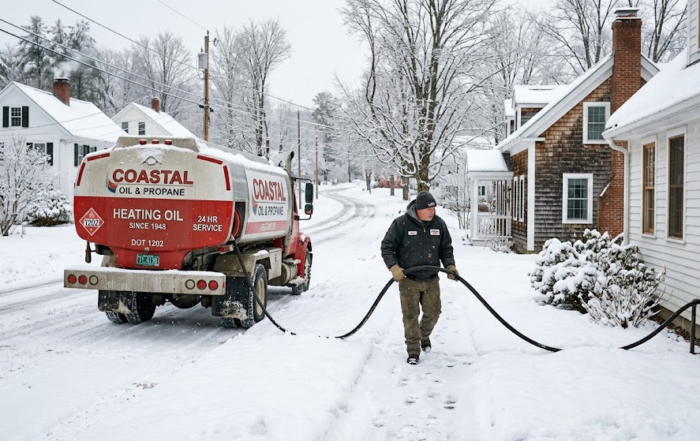
I Reported on Rising Energy Bills for CNN. Then it Hit Home
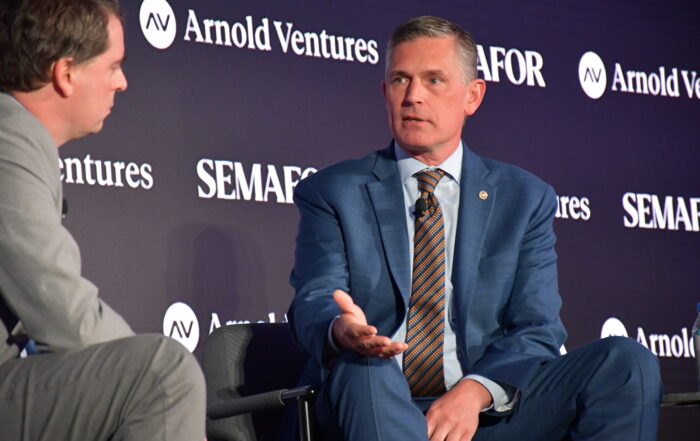
The Growing Political Clout of Martin Heinrich
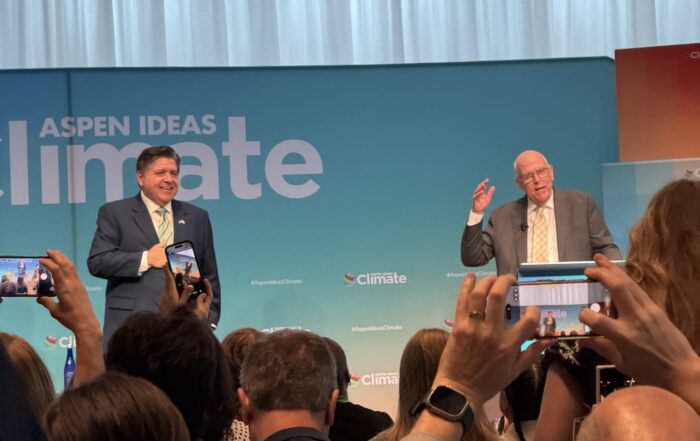
Climate Activism and the AI Buildout Come to a Head
Sign up for our newsletter
Receive updates on our work, industry news, and more.