
Morgan Caplan
Senior Communications Manager
Maryland utility bills have climbed more than 15% over the past year, part of a broader surge in electricity costs playing out across PJM, the regional grid operator serving Maryland and twelve other states. The spike has made “PJM” a household term and turned energy affordability into one of the defining issues facing governors across the region.
Governor Wes Moore has emerged as one of the leading voices pushing for reform. He’s led a bipartisan group of governors to the White House and personally pressed PJM to extend its capacity market price cap through the end of the decade — a change he says will save Marylanders and their regional neighbors more than $27 billion on their energy bills. He’s also drawn hard lines on data centers operating in Maryland, requiring them to pay for their own power and infrastructure, hire local workers, and meet environmental guidelines, and he’s pushed back on the Trump administration’s cancellation of Maryland offshore wind projects.
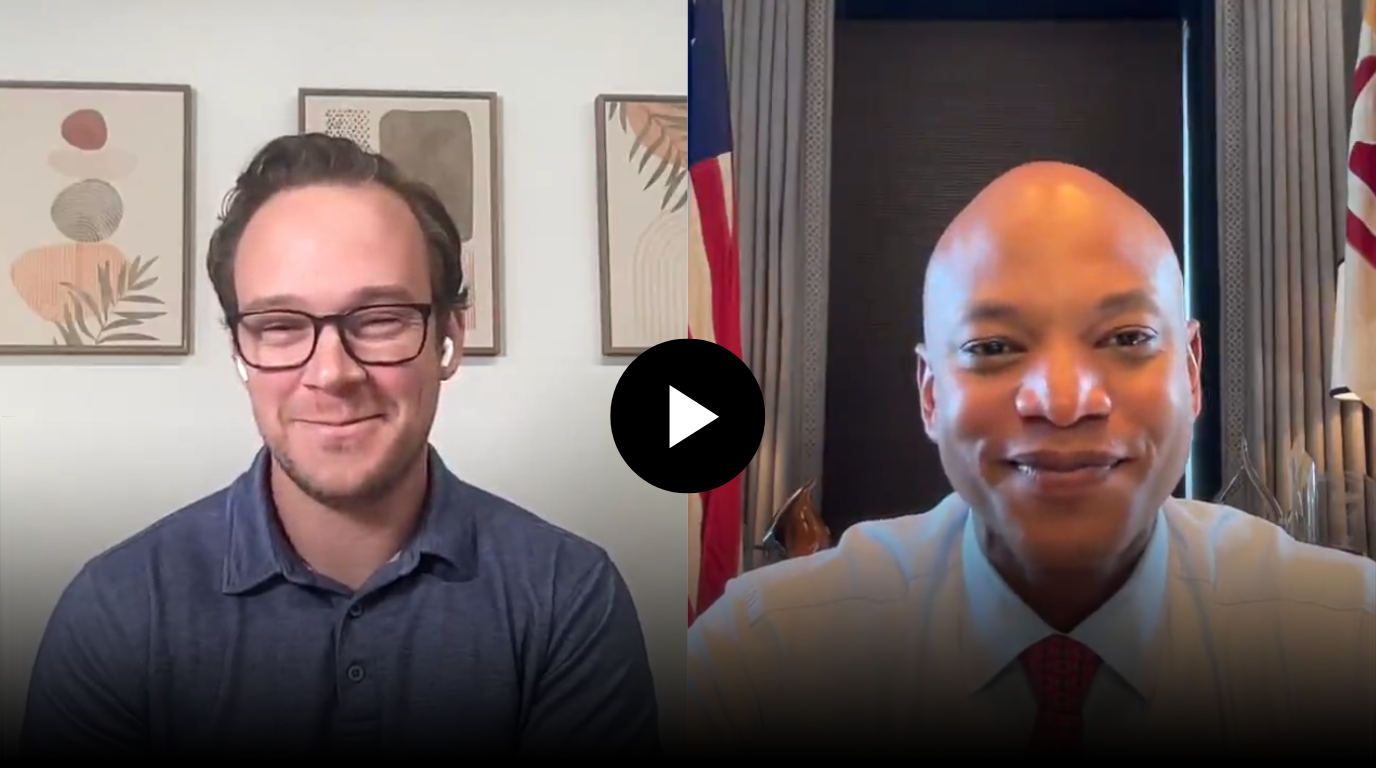
Today we’re joined by Governor Moore to talk about how he’s working to address rising energy bills, holding PJM accountable, advocating for an all-of-the-above energy policy, and balancing data centers and AI growth with affordability for ratepayers.
Chris Moyer: Let’s talk about energy bills. This wasn’t an issue when you were first running for governor, when you first took office, but it’s become a really hot issue over the last year or so. A lot of folks are seeing their bills rise exponentially. As you’re going around the state and hearing from folks, what’s your message to them about what you’re trying to do to address rising energy bills?
Governor Wes Moore: I know for far too many families across Maryland, and frankly across the country, these utility bills aren’t just high — over the past year, year and a half, they’ve been rising at an extraordinary rate. Over 15% in the past year. I hear from everyone, from our neighbors to my own mom, who tells me her bills have jumped hundreds of dollars in the past year and she doesn’t understand what’s going on.
So the thing I continue to say is that I’m taking aggressive action to ease the pressure and deliver immediate relief to Marylanders on their utility bills. We passed comprehensive legislation that gives hundreds of dollars of immediate relief on the cost of energy bills, but also addresses the long-term systemic energy challenges we’re facing.
I led a bipartisan group of governors to the White House to hold PJM — the grid operator for the region — accountable for these rising costs, and to demand they act faster and do more to strengthen the grid and get more projects online. I’ve also pushed the White House to stop canceling projects, because Maryland wants to generate more in-state energy, which means focusing on things that are quicker, cleaner, and cheaper like solar, wind, and battery storage.
I’m urging the federal administration to stop looking at this like an ideology, because it’s not — I believe in an all-of-the-above energy approach. No state can fully control what PJM or Washington does, but Maryland is going to keep applying pressure to deliver real relief for our people.
CM: You covered a lot there — let’s start with PJM. More people know those three letters than they did a year or two ago, and you’re one of the governors leading the push to change how they operate. There’s a lot of frustration with PJM. Could you speak to your efforts in more detail? I know you were at their gathering back in May — talk about the price cap and what you’re doing specifically with PJM to lower bills, or keep them from rising faster, in Maryland.
WM: For people who might be wondering what PJM is — they’re the regional grid operator. They help establish the maintenance and pace of projects coming onto the grid, not just for Maryland but for thirteen different states. PJM has a significant amount of influence over which projects get greenlit and which don’t.
I personally went to PJM and gave a talk about how we needed them to extend the capacity market price cap through the end of the decade — that would help save tens of millions of Americans across the region, including millions of Marylanders, over $27 billion on their energy bills. I told them we were willing to work with them to greenlight these projects, but what I really needed from them was to deliver on the reliability backstop procurement and get that done on schedule, which helps ensure our new energy resources have a steady pipeline.
I also needed them to clear the interconnection queue — the queue of all the projects waiting in line — and approve affordable energy options and new energy resources faster. And I pushed them on data centers: if data centers are fueling the surge in electricity demand, we need real guidelines and guardrails for them, because for too long, before I came on board, data centers were basically writing their own rules. That has to stop. Those are some of the things we’re pushing PJM to focus on.
CM: I want to ask you more about data centers and AI — the other thing we hear about constantly, and how the surge in demand for energy is affecting households. People are very concerned about the impact on their bills. You’ve talked about trying to prevent that, and we’re seeing your fellow governor in New York just sign a moratorium, first in the nation. What’s your view on that? And more broadly, how are you thinking about the parameters around AI and data centers, because while we need to keep folks’ bills from going up, there’s also a need to build up AI and compete internationally. How do you balance all of that?
WM: I’ve been very clear for months about the high expectations I have for any critical infrastructure projects, including data centers, inside my state. They need to pay for their own energy and their own improvements — taxpayers cannot and will not pay for what they’re doing. They need to hire local workers and engage local communities, and they can’t just determine where they’re going to be — if a local community has an issue, that project cannot go forward. And third, they need to comply with all environmental guidelines. Those were my prerequisites, and we’ve canceled projects because they didn’t meet them. For every phase of every project, every developer needs to know that all those things must be met.
I understand local jurisdictions actively want data centers, and I get that. But the state needs to have involvement. When I first became governor, there were already 40 to 50 data centers in Maryland — this was already happening when I came on board. The challenge I saw, and we saw it particularly in places like Northern Virginia, which became the epicenter of data center development around the globe, was that data centers were basically writing their own rules. That had to stop. We’ve taken a new approach in Maryland: focus on affordability and reliability of energy, support critical infrastructure, but don’t let those things conflict with one another.
CM: You mentioned the Trump administration and the canceled projects — I want to ask specifically about offshore wind in Maryland, and how that fits into the picture. You’ve also talked about generating more energy in-state. What does that fight look like right now, and how are you dealing with the administration’s posture toward clean energy more broadly?
WM: One thing I’ve been crystal clear about is that I believe in an all-of-the-above energy approach. Nuclear has to be an option. Solar, wind, and batteries all have to be options — all options must be on the table, because we have to do more to strengthen the grid, increase energy options and supply, bring prices down, and not compromise reliability.
The challenge I’ve seen from the Trump administration is they think about energy like it’s an ideology. It’s not, for me. The reason I support completing Maryland’s offshore wind projects isn’t because it’s an ideology, it’s because I’m fighting for clean, homegrown energy and the jobs and investments that come with it. For Maryland, that’s one of the quickest, cleanest, and cheapest ways to strengthen the grid and get more energy options online.
What I’m asking from the Trump administration is to stop looking at this like a political ideology and start looking at what’s the most effective way for each individual state to strengthen its grid. For Maryland, an all-of-the-above approach is the smartest one, and the fastest way to increase reliability and lower costs for our people.
CM: Last question, a lighter one. You’re obviously a well-known public figure at this point — what’s something that would surprise our audience, or that more people should know about you?
WM: One thing my family knows well, but maybe a lot of folks outside the family don’t, is that one of my passion points is cooking. I swear, if I weren’t governor, being a chef is one of the jobs I’d love to have. I love experimenting with different items. Jamaican food is probably my favorite thing in the world to cook. My dream is to be on Chopped on the Food Network, just get a basket of different items and have at it, because I think I’d actually do pretty well.
CM: How often are you cooking these days?
WM: Not as often as I would like, actually.
CM: We’ll have to get on the phone with Chopped’s producer to see what we can do. Governor Moore, thank you so much for your time — keep up the good work in Maryland.
WM: There we go, we should have a Chopped: Governor’s Edition. Thank you. God bless. Thanks so much, Chris.

Sign up for our newsletter
Receive updates on our work, industry news, and more.