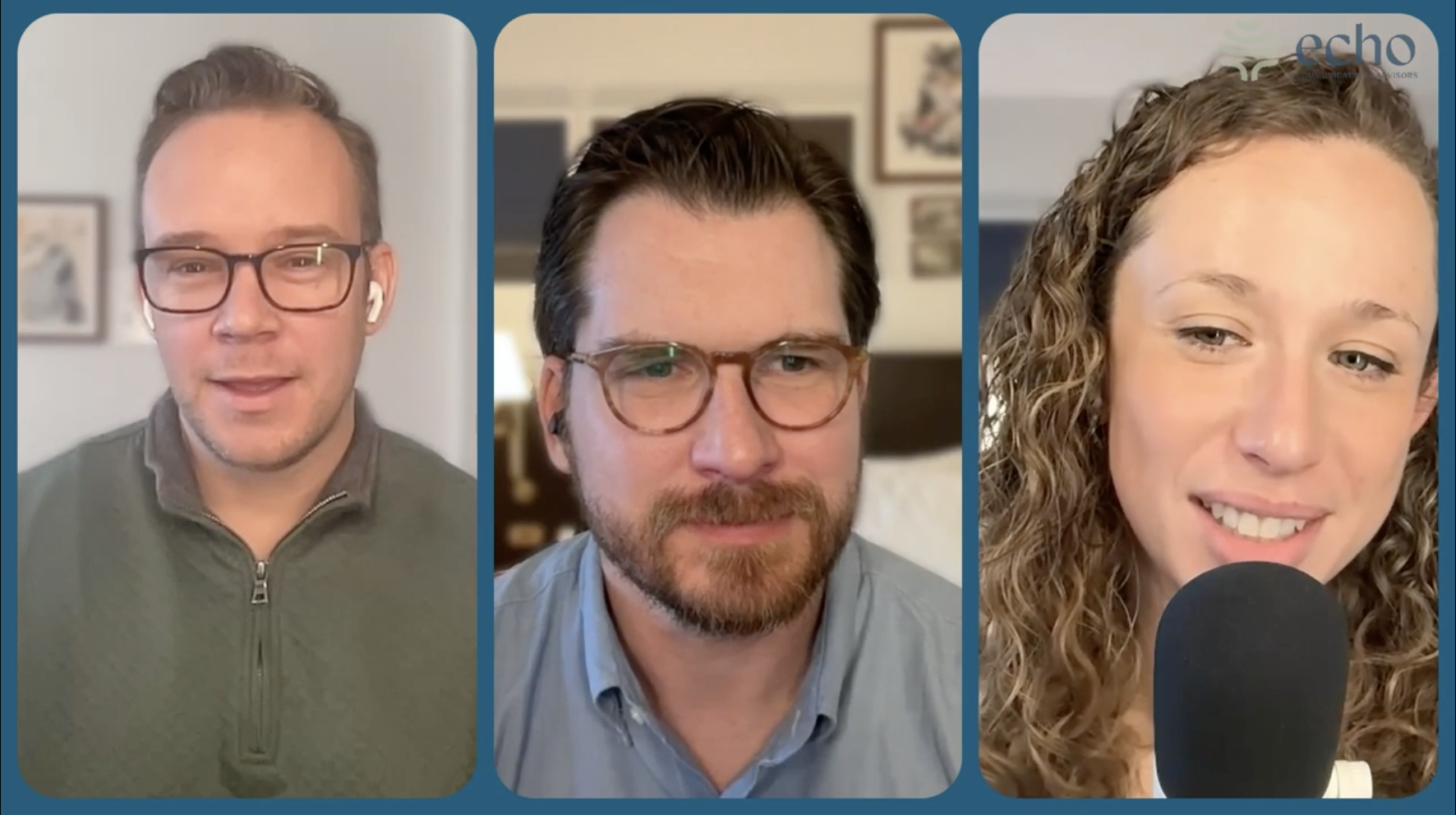
Chris, Ella and Dan check in from RE+ in Las Vegas with the latest on permitting reform ahead of a final Senate vote, and why the bill has split the climate community. They also look at who’s filling key leadership and committee roles in the new Congress, and what that means for energy policy over the next two years.
Then, a conversation with Ben Hertz-Shargel, president of the New Jersey Board of Public Utilities. Democrats won on energy affordability, and now they have to deliver. New Jersey may be the place to watch for Democrats taking office and those running in 2028.
Under Gov. Mikie Sherrill, the state is pushing for reform at grid operator PJM and looking at more nuclear power. President Hertz-Shargel talks about the BPU’s new virtual power plant program, which will pay residents and businesses to send power from their solar panels and batteries back to the grid. He also explains what the BPU actually does, how he’s leading a state agency after a career in the private sector, and how the Senate permitting bill could affect New Jersey ratepayers.
New to the show? (Aren’t we all, at this point?) Watch our 2-minute trailer to hear what the Echo Chamber is all about. The show skips the jargon and focuses on the politics shaping climate and clean energy in Washington and beyond.
In Their Words
“Utilities today operate under a cost-of-service regulatory model, which means they get paid more the more they spend. Clearly that is not a recipe for affordability.”
Ben Hertz-Shargel, President, New Jersey Board of Public Utilities
Subscribe Wherever You Listen



New episodes every other week on Spotify, Apple Podcasts and YouTube. Next up: our next episode drops on December 3.
About the Hosts
- Chris Moyer has advised three U.S. senators, including U.S. Senate Majority Leader Harry Reid during his 2010 re-election, and was New Hampshire communications director for Sen. Cory Booker’s 2020 presidential campaign.
- Ella Nilsen is a former CNN climate and Vox politics reporter who brings years of experience in investigative and national political journalism.
- Dan Crawford worked on the 2008 and 2012 Obama campaigns and in the Obama administration, and has a long background with issue advocacy groups.
Full Episode Transcript
Chris Moyer: Welcome to the Echo Chamber podcast, presented by the Carbon Removal Alliance. Alongside Ella Nilsen and Dan Crawford, I’m Chris Moyer. On today’s show, we speak with New Jersey’s chief utility regulator, Ben Hertz-Shargel, about how the Garden State is tackling energy affordability. We discuss the latest on permitting reform as we near a final vote in the Senate, and we take a look at how key leadership roles are being filled in Congress and what personnel portends for energy policy in the next two years.
But first, our team is hiring. Echo is looking for a director with six to eight years of experience. We want someone who knows the energy policy landscape and the reporters who cover it. We especially value experience on Capitol Hill, in administrations, in journalism or on a political campaign. For more information and to apply, please visit echocomms.com/director.
All right, Dan and Ella, we are here in Las Vegas for RE+, the massive annual solar industry trade show. We’re recording on Tuesday morning, the second day and first full day of the show. So my question to you is: how much time have you spent in this wonderful city, and how was day one?
Ella Nilsen: We got in yesterday. I love Las Vegas. I’ve been here a few times for work when I was a reporter. But there is a difference between Las Vegas and being in a very dry convention center where everything looks the same. That’s kind of the duality of Vegas, because a lot of people come here for work and conventions. So you have conference rooms with nothing on the walls, and then you have the Strip, and it’s a bit of fun.
Dan Crawford: This is my third time in Vegas, but my first for work. I will say it’s breaking my brain a little bit to be in Las Vegas for a conference. It does feel like the convention center could be anywhere. I’m hoping to spend a little time in the city and not just within the four white walls of the Las Vegas Convention Center. But it’s been good so far.
Ella Nilsen: Out of the three of us, I believe you used to live in Vegas, Chris, correct?
Chris Moyer: As someone who grew up in New Hampshire, I’ve spent far more time in Las Vegas than I ever expected, including living here for a year way back in 2010, working for former Majority Leader Harry Reid. I lived in Henderson, which is a suburb of Las Vegas, and was 22 and didn’t know any better.
Ella Nilsen: Back when I was covering presidential politics — and obviously I’m from New Hampshire, so I spent the most time covering the New Hampshire primary — because of Harry Reid’s influence, Nevada always came right after New Hampshire. It was always fascinating to go from very New England house parties at Cape Cod homes in New Hampshire to Vegas. And the Culinary Union is a really fascinating part of the city. It’s a study in contrasts of the country and the Democratic Party.
Chris Moyer: I think there’s way more to Las Vegas than most people who come here for entertainment understand. It’s a fascinating political state, with so many different types of people from all over the world. And when you think about energy and environmental issues, in Iowa and New Hampshire, traditionally the first two states in the nominating process, you don’t have to worry about water use the way you do here in the middle of the desert. Part and parcel of that is conservation and public lands. I didn’t know what BLM was until I had to study up when I was interviewing with Harry Reid’s office. The federal government owns more land in Nevada, as a percentage of its size, than in any other state. So there are different issues that bring different political discussions and lead to different policy outcomes in Washington.
Dan Crawford: What have folks’ impressions of the conference been?
Ella Nilsen: I think the vibes are obviously up, post-midterms and after the last two rough years the industry has had. There’s been a lot of touting of solar being the fastest-growing energy source and adding the most power to the grid for a few consecutive years. So there’s a lot of excitement and a lot of bullishness coming through in some of the things we’ve attended.
Dan Crawford: It’s been good to see the clean energy industry adopt a slightly more muscular posture. We heard from Gov. Tim Pawlenty, who leads SEIA, last night about the work SEIA’s PAC and c4 did in the election. When you combine that with some of the work the Invest in Tomorrow campaign has done and a few other players, you’re starting to see an industry that acts like it belongs in Washington and in politics, and that realizes how big and important it is to the economy — and really acts like it for once.
Chris Moyer: Going back to last summer when the One Big Beautiful Bill passed, I was hoping a lesson the industry would take from that drubbing is that it needed to build political power for the long term. And it has to be the industry chipping in. These companies and developers have to think of it, as Steph Bosch with SEIA said yesterday, as part of their business development budget and the cost of doing business. That has not been the case. You’ve both alluded to the two big efforts in this space, and SEIA is doing an incredible job of putting itself on a trajectory where it can really influence races and build friends in Washington and at the state and local levels too. They did a lot with a little bit of money this cycle. They have big aspirations, but they need the industry to support them, contribute and understand the value in that, and it seems they’re heading down the right path.
Within the span of just a few hours yesterday, hearing from Gov. Pawlenty, Steph Bosch and Andrew Regan, and then from Tom Matsy at a different event, it was really notable that on the first day of this conference, building political power is the subject of conversation. That’s a welcome development. They play different roles in the ecosystem: the Invest in Tomorrow coalition is kind of the stick, and I think SEIA sees itself as more of a carrot. That pairing can be pretty effective.
Dan Crawford: And they’re very clear-eyed about where they are and where they need to go. They’re being very forthright about their plans, and their pitch to industry is: we need you in this fight. We can’t just rely on environmental groups or climate advocates to push for clean energy; we need to show up as an industry. And I think it’s starting to bear fruit, which is great to see.
Ella Nilsen: To your point, Dan, a lot of people have talked about how the clean energy industry has, in the past, used green groups as a stand-in to be its voice. But they are different, and we’re seeing some of that play out with the permitting bill right now. You could argue that after the last two years — between OBBB and the general freeze on permitting clean energy projects in the Trump administration — if they weren’t doing this, people would be asking, what are you doing? And a lot of our attention is on federal, but the success they’ve had has been in state races, and I think you’re going to see a lot more of that.
Dan Crawford: A lot of the races the SEIA folks were highlighting last night were state level: state rep, state senator, public service commissions.
Ella Nilsen: Georgia PSC, yeah.
Dan Crawford: Which is where a lot of policymaking is going to happen, while still keeping an eye on federal policy and making sure that when the time is right for big federal moves, they have champions in place.
Chris Moyer: And at the state and local level, dollars can go further. There’s less money being spent overall in those races, so they can have an outsized impact.
Dan Crawford: It’s getting to be a little cliché for organizations to talk about Moneyball and going where their dollars go farthest. But at the organizational level, you are seeing groups look for those smaller races where they can have an outsized impact, rather than giving a bunch of money to a Senate candidate who already has millions to spend.
Chris Moyer: Ella, you mentioned permitting reform. For the second straight Monday, the Senate held a procedural vote on the permitting reform bill, BAJA, and it received 70 votes this week. Last week it received 73. That’s a pretty solid, bipartisan show of support. Almost every Republican is supporting it, and about half of Democrats. The path to passage in the Senate is looking a lot clearer. Now they’re working out amendments, but the sense from the big four negotiators — Shelley Moore Capito, Sheldon Whitehouse, Martin Heinrich and Mike Lee — is that they’re not going to make major changes, maybe some tweaks around the edges. That makes sense, because it’s a very delicate balance, and if you go too far in one direction, you lose votes on the other side. The amendments would need 60 votes to pass, but the underlying bill just needs a simple majority, and that could happen before Thanksgiving, as soon as this week. We can get to the House in a second, because the bill obviously has to go over there and there are some conversations we should talk about. But there have also been some notable supporters and detractors coming out in the last few days. Dan, can you share where some noteworthy people are landing on the bill?
Dan Crawford: You’re starting to see folks on both sides of the debate laying down a marker. Notably, Evergreen Action came out in support of the bill, which stands out as one of the more prominent environmental organizations offering really strong, full-throated support. They’ve been on podcasts and out in the media talking about it, and they cite the impact on transmission and grid utilization, as well as some of the data center and utility provisions, as key factors that will accelerate the energy transition.
Chris Moyer: Could you say a little more about why they stand out?
Dan Crawford: Largely because they’re the biggest and most notable pure environmental organization to come out in support of the bill. Others among the big green groups have either offered more tepid support or not said anything one way or the other. LCV is opposed to the bill, but their opposition has been a bit more reserved. They called on senators to “find a better balance between the energy deployment provisions and conservation,” but they also said the procedural votes would not count against senators’ scores. The LCV scorecard is a really important marker for the environmental movement, and senators are really keen to stay on LCV’s good side.
Chris Moyer: Because they have a lot of money to spend in elections.
Ella Nilsen: Yes. I will just say it wasn’t that surprising to me to see Evergreen come out in support, given how they started. It was kind of an offshoot of a lot of former Jay Inslee staffers. Jay Inslee is the former governor of Washington State, and he ran for president in 2020 on a pretty much climate-only platform. Evergreen hasn’t been around as long as, say, LCV or NRDC, but their North Star has always been clean electricity — electrify everything and make sure that electricity is clean. With that as the context, it makes sense that, among the big green groups, they’re the ones fully supporting this.
Dan Crawford: I think this bill has really exposed the fault lines between the pure clean energy and climate organizations and the air, water and conservation groups. Those fault lines have been evident for a while, and going back to our conversation about the clean energy industry not relying on green groups to do its work in Washington, this is further evidence of that. I don’t see those fault lines going away. But it is interesting to see folks who are willing to put some of their older biases aside in the interest of getting as much clean energy on the grid as possible.
Ella Nilsen: It really exposes the fault lines between the keep-it-in-the-ground, no-more-fossil-fuel-development people and the people who say, let’s just build as much as we can and clean energy will win the day on economics. I’m not saying either one is better, but it’s a reflection of where we are right now, especially since, as we’ve talked about a lot, the incoming class of Senate Democratic freshmen includes a few members from oil and gas states. It’s a reflection of how these things have changed.
Chris Moyer: It is interesting that in this lame-duck session, the environmental groups’ opposition — and the senators and House members who really care about what they say and vote accordingly — is going to have little impact on the outcome. They would have much more influence if this bill is pushed to next year, and we can get into what that would look like. But the enviros are not in a position to stop this bill.
Dan Crawford: Well, we’ll see what happens when it gets to the House. They will have an opportunity to make changes there.
Chris Moyer: Who’s “they”? The House in general, or the environmentalists and the Democratic caucus? Because Speaker Mike Johnson is enthusiastically on board with this bill. And we should note that President Trump is very much on board. It’s been interesting that every time certain amendments have come up, even from the Republican side — take transmission, for example, where some Republicans are trying to weaken the provisions — the White House has said it does not support weakening this carefully negotiated bill. They want this done.
Ella Nilsen: Which is wild considering the timing, coming completely after the midterms. It’s long past the time they can tout this electorally. I’ve been surprised to see Trump and the White House still so on board with it.
Dan Crawford: And not just saying they support the bill — they’re talking to the press, and it seems like they’re working behind the scenes. It is genuinely surprising that the White House is so enthusiastic about it.
Chris Moyer: They’re doing all the right things if you want to pass the bill. The president himself tries to mess it up from time to time, like his ill-timed comments just before the first procedural vote in the Senate saying he’ll never allow wind permits to go forward. But the operation around Trump is doing all the right things for an administration that says it wants to pass a bill. They just have to manage the one person in the Oval Office who can get in their own way.
Other proponents include the New York Times editorial board, which came out with a piece last week saying Democrats should take the deal and anyone who cares about climate change should cheer this bill. Also from the New York Times, Ezra Klein wrote a piece over the weekend saying he supports the bill because it moves the fight over what gets built out of the agencies and into elections and markets, and that leaving the system unchanged is a guarantee of calamity. So Mr. Abundance is weighing in here.
Ella Nilsen: My old boss. Not surprising that the guy who co-wrote the book on abundance is for building more energy infrastructure. But I digress.
Dan Crawford: Chris, you had a good piece in our newsletter about why you don’t think Democrats should hold out hope of getting a better bill next year. Whether or not you support the bill, I thought your analysis of the argument that Democrats should hold out for a better bill was really smart.
Chris Moyer: There are plenty of good-faith reasons to support the bill on substance, whether it’s tribal say over their lands on certain projects or the permitting certainty questions and how the Trump administration will handle permits on a whole host of issues that have been discussed over the last several weeks. But the argument that never made sense to me was that we should wait for a better bill that Democrats write with their new majorities next year.
This is the third cycle now where a permitting reform bill has been negotiated and hasn’t gotten across the finish line. And the math just isn’t there for a bill that can get 60 votes in the Senate. The filibuster is still in place. That’s assuming all 56 Democrats — most likely 56, now that Mary Peltola’s race in Alaska has been called — vote together. As Ella was saying earlier, you can’t assume James Talarico and Mary Peltola, who campaigned as pretty pro–oil and gas, coming from oil and gas states, are going to support a bill that’s all good for clean energy and does nothing for oil and gas. So the math isn’t there. And we haven’t even gotten to the fact that President Trump is still president and can veto any bill. If this bill doesn’t pass in the lame duck, there is going to be no permitting reform next Congress, in my view.
And that’s a shame, because if you believe Democrats are going to have another good election cycle in 2028 — and historically you can make a good argument for that — then a Democratic president comes into office in January 2029. Whoever that person is could benefit from this bill finally being at the point where you start to see its effects on the energy system. That’s why the conversation is always that President Biden got the IRA passed, but you really needed permitting to unlock it. It had to be a one-two step, and that second step has been missing.
Ella Nilsen: He did the thing to get projects and generation built, but there was still no way to move that power effectively around the country.
Chris Moyer: Exactly. So why not set up the next Democratic president, if that’s the case in January 2029, to really benefit from a build-out of clean energy all across the country that gets to this goal of affordability and lowering prices? It’s not going to happen overnight. I kind of agree: take the deal. Or oppose it if you want, but don’t do it on the grounds that you’re going to get a better deal in 2027 or 2028.
Ella Nilsen: And Chris, that was the thing Biden’s energy advisors always talked about. John Podesta, when he was in the Biden administration, talked a lot about the need for transmission — saying it’s great that we have all these tax credits and can build stuff all day, but if the power isn’t moving effectively across the country, it doesn’t really matter. We’ve also seen interconnection queues getting clogged, and this is a real problem. There are oft-cited statistics about how much renewable power is sitting in queues — all this wind power, all this solar power — that just can’t get where it needs to go. But ironically, John Podesta does not support BAJA. So that just shows you it’s always complicated.
Chris Moyer: Speaking of next Congress, there are going to be leadership changes — some potential, some certain — at the very top of each caucus in both chambers, and on key committees that affect energy policy. Ella, what’s going on with both parties?
Ella Nilsen: Well, energy nerds like us are talking about permitting reform like it’s the hottest thing in town. But I think the actual hottest thing in the Senate right now is the challenge to the likely incoming Senate majority leader, Chuck Schumer. The challenge is coming from Sen. Chris Van Hollen of Maryland. It’s interesting, because back when I covered the Senate, I never really had him pegged as a guy to shake things up. He used to lead some of the campaign committees for Democrats, and back when he was in the House, he was pretty high up in leadership. So I always thought of him as a bit of an institutionalist.
But last year, during the first year of the Trump administration, when a lot of deportations were starting, Van Hollen was very vocal and out front in the effort to bring Kilmar Abrego Garcia back to the United States from the prison where he was being held in El Salvador. It was a time when Democrats really had no leader, and everyone was shell-shocked in the first months of the Trump administration. Van Hollen was out there showing Democrats a model of how to lead even in that situation. And he recently said he was going to challenge Schumer for leader.
It’s going to be interesting to see. He said his number of supporters has risen from about 10 to 15. Bernie Sanders has been very vocal in saying we need a change, and Abdul El-Sayed, the incoming senator from Michigan, has supported him. I’m curious what you guys think his chances are, but at least it’s interesting to see this conversation happening and a bit of a shake-up.
Dan Crawford: I don’t know that his chances are particularly great. Fifteen is a long way from the 28 he’ll need, and Schumer has an awful lot of popularity within the caucus. I would be surprised if this works out in Van Hollen’s favor. But he has garnered a lot more support than you might have thought six months or a year ago if you’d mentioned him as a potential challenger to Schumer.
Chris Moyer: I think you’re right that it’s probably unlikely, but crazier things have happened, and all it takes is a little spark for things to cascade. He has roughly two weeks until leadership elections are held in December after Thanksgiving, so there’s some time to gin up more support. I’m curious to see where someone like Elizabeth Warren lands on this.
Dan Crawford: Schumer’s leadership was a big flashpoint in Democratic primaries, with a lot of challengers saying they wouldn’t support Schumer as leader. It remains to be seen whether there’s any energy around that now that the elections are over. These senators have six years. Are people really going to care who the Senate majority leader was when they’re up for reelection, or was this just a campaign issue that goes away once folks get down to the business of governing?
Chris Moyer: I think there are two groups of senators to pay attention to here. One is those up for reelection in 2028, because the base of the Democratic Party does not like Chuck Schumer. As you mentioned, we saw in primary after primary that if you said you wouldn’t vote for Schumer for leader, you’d earn support and applause from primary voters. The other is those who are going to run for president and are looking to curry favor with Democratic primary voters. So there’s a lot to potentially be gained. I would have expected more senators to come out and support Schumer than have, so there’s some gray area here and some lack of vocal support. I don’t know that you can trust anyone’s numbers when they say they have X number of votes. There’s a potential show of force from Schumer trying to make this seem inevitable. Van Hollen has some work to do, but I don’t think this is a done deal.
Someone else to watch — she’s not in the Senate Democratic caucus, but she could help push this further — is AOC. She came out and supported Hakeem Jeffries for speaker pretty quickly, but she hasn’t done the same for Schumer. Of course she doesn’t get a vote, but it’s her home state, and there’s all the speculation about whether she’ll run for president, run for Senate, challenge Schumer or push him to retire rather than run for reelection. If she decided today to endorse Chris Van Hollen for Senate leader, that could make Schumer’s life a little more challenging over the next couple of weeks.
Ella Nilsen: She’s shown herself to be a good picker of candidates. She has a good track record.
Chris Moyer: That’s right.
Dan Crawford: Poor Chuck Schumer. You have the biggest Senate victory in a generation, and everybody’s talking about how you haven’t done enough and need to go. What do you have to do?
Ella Nilsen: This was the same thing in 2018 with Nancy Pelosi. They had this huge wave election, and immediately there was a fight over leadership. But she prevailed, so we’ll see how he does. Besides that, it really seems like the only leadership race that could prove interesting. For the other three of the big four, things have either shaken out or seem to be on a glide path, with less drama. Hakeem Jeffries seems to be on a glide path. He’s the younger generation, so there’s less of the age question there. There is a vote coming up, and we’re taping this on Tuesday —
Chris Moyer: The vote will have happened by the time this comes out.
Ella Nilsen: Exactly. But it seems like he is assured to win. Sen. John Thune, the Republican leader, has already won. And on the House Republican side, Jim Jordan, who has always been the brawler of the House Republican conference, is going to be their leader. So the only really big question mark left — and you could argue how much of a question mark it really is — is the Schumer–Van Hollen of it all.
Chris Moyer: How about the key committees for energy policy? What’s changing there?
Ella Nilsen: It seems like a bit of the usual suspects. On Energy and Natural Resources, Martin Heinrich is going to be the chairman. He’s obviously been very instrumental in permitting reform. On Senate Environment and Public Works, the committee that oversees the EPA, Jeff Merkley has announced. He’s the senator from Oregon — very progressive, cares a lot about climate. There are a number of other key committees that still need to shake out, but on Senate Finance, I believe Ron Wyden is sticking with that. So it’s going to be a lot of familiar faces — people who were involved in the IRA and are really smart on energy and clean energy.
Chris Moyer: And Sheldon Whitehouse is leaving EPW to chair the Judiciary Committee. That’s another motivation for him to get this permitting bill done now. He probably sees it as a key piece of his legacy, a big accomplishment he wants to wrap up. I think Jeff Merkley is going to approach things a little differently than Whitehouse did. And with Sen. Heinrich becoming chair of Energy and Natural Resources, Mike Lee will not be the ranking member. They haven’t had the best relationship over these last two years, so I think Sen. Heinrich is probably grateful to have a different partner — although they did work together on BAJA. We’ll see how that shakes out.
All right, when we come back, our interview with Ben Hertz-Shargel, president of the New Jersey Board of Public Utilities.
Ella Nilsen: Today we are pleased to be joined by Ben Hertz-Shargel, president of the New Jersey Board of Public Utilities. Democrats campaigned on the promise of delivering more affordable energy, and now that they’ve won many of those races, they must deliver. If they want to find solutions, one place they should look is the state of New Jersey. We’re excited to talk to Ben because New Jersey has been aggressively trying to tackle high energy costs since Gov. Mikie Sherrill was elected in 2025, when energy costs became a salient issue for voters. BPU President Hertz-Shargel is at the forefront of that effort. Pursuing everything from a statewide virtual power plant to more nuclear power to PJM reforms, New Jersey could become a model for other states looking to lower costs. Hertz-Shargel was nominated by Gov. Sherrill in June and was previously the global head of grid edge at Wood Mackenzie. Ben, welcome to the show. Thank you so much for being here.
Ben Hertz-Shargel: Thanks so much for having me.
Ella Nilsen: As we mentioned, New Jersey has really been out front on energy prices. What do you view as the New Jersey Board of Public Utilities’ mandate from voters to bring down costs?
Ben Hertz-Shargel: Affordability is what we hear time and again. It’s the core thing we are focused on. It comes from the governor through her executive orders, and we regularly hear it from our constituents. Affordability is number one, but a reliable and resilient grid is number two. We really need to do all of these things, and we’re taking some really big policy swings to achieve that, as you laid out in your intro.
Ella Nilsen: I wanted to step back and ask a bigger-picture question. I feel like a lot of people, and a lot of voters, don’t really understand what PUCs and PSCs do. Can you explain, as simply as possible, what the New Jersey BPU does?
Ben Hertz-Shargel: Sure. It’s extra complicated because sometimes there are multiple agencies and sometimes there’s a single one. In New Jersey, we have one agency, the Board of Public Utilities, that handles regulation but also acts as an energy office.
On the regulatory side, we determine how utilities recover the money they spend. We make sure they’re making prudent expenditures, like building transmission lines and running programs, and decide how much of those costs they’re able to recover. But we also create our own programs and make sure we’re serving all parts of society, from low- and moderate-income customers to large industrial customers — putting guardrails around data centers and ensuring we have solar compensation. So we’re regulating utilities, which in our case includes electricity, natural gas and water, and we also have oversight of broadband. Then there’s a whole other aspect of what we do, which is deploying money to support key areas of the energy space that might not be served by the market. That includes things like energy efficiency and some equity-related programs.
Chris Moyer: You’ve spent most of your career in the private sector, and government agencies can be their own beast. They operate at a different speed. I’m curious about your philosophy for leading an organization that isn’t necessarily known for being nimble as you work to address these very urgent concerns around energy affordability. How do you approach it? And what’s surprised you in your first few months — what’s going well, and what could be better?
Ben Hertz-Shargel: It’s a great question. I’ve spent a number of years in startups on the technology side of the clean energy space, and most people associate startups with the most frenetic pace — the fastest-moving, the most innovative. What I can say is that coming to a public utility commission, the BPU, I was absolutely shocked by the rate and the scale of work we are responsible for. There are so many things happening at once, in many cases on extremely aggressive timelines set by bills that get passed or by other statutory requirements. The rate of work is pretty staggering, and I think that’s an important takeaway for people. When the legislature passes a bill, it often creates a really important responsibility for us. One example is designing a tariff for data centers to put guardrails around the resources they consume and how they operate. It’s a ton of work that needs to be stood up quickly, on a very aggressive clock. The team here is a crack team, with experts across a whole range of disciplines, and I’ve learned a lot being here. But to your point, I do think I bring a private-sector way of operating and project management that’s a bit of a different flavor from what I found at the agency, and I think the two working together are powerful.
Ella Nilsen: On new programs, the BPU recently announced the state’s first virtual power plant program, where residents and businesses can get paid to send power from solar, batteries and other appliances back to the grid. I read that it should be up and running by October of next year. What’s your hope for the program, and do you anticipate any difficulties working with the state’s utilities to stand it up?
Ben Hertz-Shargel: We are super excited about this program, called Power of New Jersey. It’s going to be a statewide program, so all four major investor-owned utilities will be part of it and run their own parts of the program, but we’re ensuring it’s consistent statewide. What’s really important is that a significant share of grid spending is devoted to the few hours of the year when the grid is stressed. You have to make sure there’s enough capacity in the transmission and distribution lines, and enough power plants, to serve customers and avoid a blackout. It’s very expensive to maintain those few hours. It’s much cheaper to pay families and businesses to reduce their energy use during those key moments, because there’s usually a lot of latent flexibility in how homes and businesses operate, which makes that relatively straightforward. And there are smart devices everywhere — built into commercial and industrial facilities, and in things like smart thermostats, EVs and EV chargers, and even water heaters. That’s the goal of what we’re doing.
There are some really interesting differentiators between what we’re doing and what exists in other states. Where these programs exist, they’re usually utility-specific, not statewide, and they’re rarely used to realize benefits for ratepayers. They sit off to the side, and the utility makes the same investments it used to; it doesn’t count on them. So you’re paying for these programs but not getting value. We’re making sure we get real value from them: reducing our exposure to capacity prices in PJM, to transmission prices and even to electricity prices by reducing usage during peak price times. That’s unique. And, getting a little into the weeds, there are some program design features we went with that don’t exist in other programs, which marry residential programs with traditional commercial and industrial programs that have never been combined in one unified program. So we’re really excited about it.
Chris Moyer: Sorry, Ella — just to follow up on the utility piece. Utilities have been resistant in other places. Are you optimistic it will work better in New Jersey?
Ben Hertz-Shargel: It’s a very reasonable question. The reality is that utilities today operate under a cost-of-service regulatory model, which means they get paid more the more they spend. Clearly that is not a recipe for affordability: they want to spend more so they can earn more, and all of that money ultimately comes from ratepayers. What we are trying to do — and this was required by Gov. Sherrill in Executive Order One — is modernize utility regulation, in part to align utilities’ compensation with outcomes for customers. That can be the quality of service, but it can also be how little people are expected to spend. We started this earlier in the year, before I joined. The first phase was a report, published in the middle of the summer, laying out a menu of options for how we can better regulate utilities and align their incentives with customer outcomes. Right now we’re in the middle of phase two, which is doing some really deep quantitative modeling of those options and their outcomes, and we’ll probably make a determination early next year on what we want to pursue. But the bottom line is that utilities are rational actors. They will follow their economic incentives. We want to redesign those incentives so that what they want is aligned with what customers want.
Chris Moyer: There are a lot of new governors who, if this works, will probably be looking to New Jersey to see how they can do the same thing in their states.
Ella Nilsen: I was going to ask — sorry to stay on this thread for a second — have you gotten any phone calls from policymakers in other states looking to replicate the model you’re pursuing?
Ben Hertz-Shargel: Yes, we have gotten lots of phone calls. I work with other regulators, and we’re always in conversation, looking to share best practices. There have been attempts to do similar things in other states. Hawaii actually had a pretty progressive regime, and there were benefits and there were challenges they faced. It’s a hard thing to do. You’re steering a big ship, and you need to do it carefully. I think we’re benefiting from some prior attempts that have had mixed results. But given the governor’s commitment, and the BPU’s commitment under her leadership, we are really confident we will stay the course. We have lots of great experts supporting us, and we do expect to be a model that other states can look to as they implement these same kinds of changes.
Ella Nilsen: Shifting to a slightly different topic: PJM. I don’t think a lot of people knew about PJM — the Mid-Atlantic grid operator and the largest such grid operator in the country — until a few years ago. But it’s driven a lot of energy news due to really eye-popping rises in its capacity market and the trickle-down effects on consumer costs in Mid-Atlantic states, including New Jersey. Just last month, Gov. Sherrill and 12 other governors in PJM states formed a governors’ collaborative to try to reform PJM. What changes and reforms are you hoping to see?
Ben Hertz-Shargel: It’s a big topic. There are many reforms needed at PJM. You mentioned the capacity market. In short, the reason prices spiked so dramatically in the last couple of years is that data centers simply showing up in utilities’ forecasts — not even being in the ground, just showing up in the forecasts — raised prices in PJM’s capacity market, which are then passed through to all customers in the region. The forecast alone really created these costs. Going back to the virtual power plant program, we’re reducing our exposure to those costs by ensuring we can send signals to commercial facilities, batteries and EV chargers to reduce their consumption at those key times.
So we’re working on our side to reduce our exposure. But within PJM, a number of proposals are being floated. The BPU issued a report a couple of months ago recommending a seasonal capacity auction to make it a bit more targeted, rather than one yearly auction — there might be one in the summer and one in the winter. We also recommended what’s called a prompt auction, meaning it’s held right before the delivery year rather than many years in the future, as it’s done today. The problem with the current approach is that you’re relying on forecasts, and right now no one knows how much data center demand there will be in three years. That uncertainty creates a big premium on prices. So the capacity market is a big piece.
There are other very wonky aspects of the market that require reform that I won’t get into. But a key thing to say is that right now, states have basically no authority within PJM. We’re on the sidelines. PJM is governed by the companies that operate within it, called the members, and they have a lot of control. For the states, there is no alignment of authority with accountability. We are accountable to our constituents for prices and outcomes, but we have no say in the market. That’s something we’re working hard on across all 13 states in PJM, plus Washington, D.C. — to get that voice in PJM so we can drive the kinds of reforms needed to bring down prices.
Chris Moyer: The energy debate in Washington right now is all about the permitting reform bill, which could pass the Senate as soon as this week. What’s your view of the bill, and how would its passage affect your work in New Jersey to lower energy costs?
Ben Hertz-Shargel: Permitting is certainly an important topic. In the state, we’re really focused on what we can do without relying on the federal government — what we can do in New Jersey. We have a lot of key tools to effect some really big infrastructure changes, including development. One really important thing: a bill passed this summer, called the Advanced Grids Technology Act, gives the BPU the authority to regulate what are called supplemental transmission projects. These are transmission projects that live in a gray zone between what PJM regulates and what the BPU has a clear mandate for. New Jersey has historically had a very high cost of transmission that flows through to customers, and these projects could be built by utilities without really any oversight. Now we have that oversight. It’s closely related to permitting, but it’s really a siting authority the state has. And a key provision of the bill requires consideration of what are called advanced transmission technologies, or ATTs, which basically bring down the cost of transmission. Transmission is one of the key focus areas of the permitting bill, but we’re focused on what we can do in state to make sure we have the infrastructure we need at a reduced cost, leveraging the newest technologies. That’s how we’re approaching it, and how we’re trying to take big policy swings to deliver on the governor’s affordability agenda.
Chris Moyer: Without necessarily taking a position on the federal bill — I understand the state focus — is there anything the federal government could do that would make your job easier?
Ben Hertz-Shargel: In the context of PJM, PJM is regulated at the federal level by FERC, and ultimately FERC will determine what reforms happen at PJM and whether states get a voice there. So it’s not a question about the federal administration, but from a regulatory standpoint, we’re really hopeful that FERC — which I think deeply understands the issues PJM faces — will give states a voice in what happens in the market and let us take a more muscular role in achieving the reforms we need to bring down costs.
Chris Moyer: Well, that’s all the time we have for today. President Ben Hertz-Shargel, we really appreciate you taking the time to come on the Echo Chamber and lay out why New Jersey is somewhere folks across the country should pay attention to for the work you’re doing on energy affordability. We’ll certainly be keeping an eye on it, and we’re excited to see the progress you make.
Ben Hertz-Shargel: Thank you so much. Thanks for having me.
Where energy and politics collide
Chris, Ella and Dan dig into the bare-knuckle politics shaping clean energy. New episodes every other Thursday.