Dan Crawford
Senior Vice President
Are data centers a threat to affordability or an opportunity for clean energy? Yes—they are both.
After two decades of being essentially flat, electricity demand is skyrocketing at exactly the same time as clean energy is meeting the moment as the cheapest and fastest way to get electrons on the grid. Suddenly the climate conversation is all about grid interconnection, transmission and distribution, and speed-to-power.
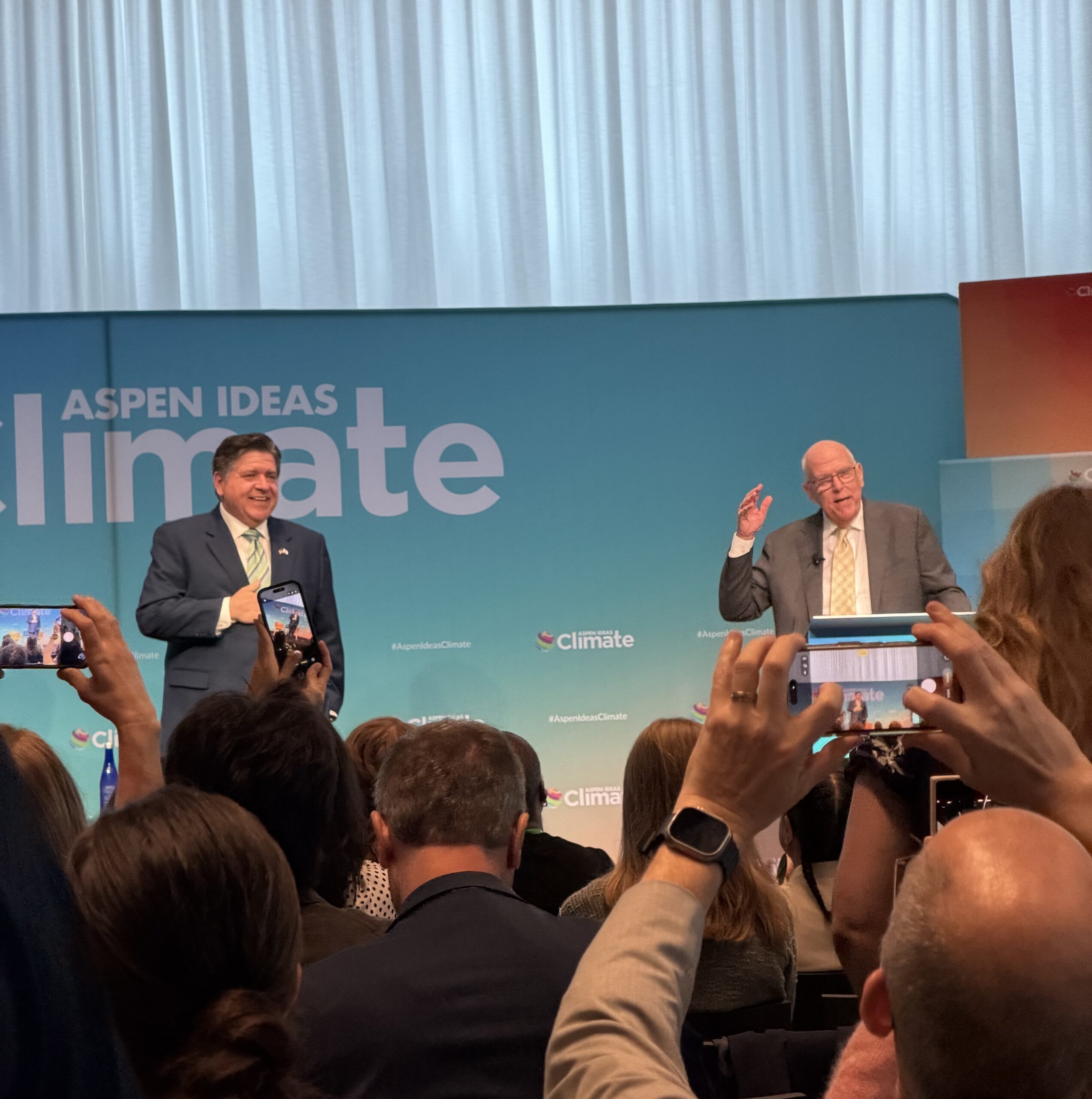
I spent last week in Chicago for Aspen Ideas: Climate, where it felt like there were two conversations happening in parallel. One was about making the case for climate action—one of the four tracks of the festival was “trust”—and one was about data centers. Indeed, I sat in on several panels where the word climate didn’t even come up. It was taken as a given that meeting demand and lowering electricity prices is an opportunity for clean energy.
The response at the state level is more nuanced—with public sentiment towards data centers souring and a majority of Americans blaming them for rising electricity prices, it’s clear that load growth will only be an opportunity if the right policies are in place.
Three Governors, Three Approaches on Data Centers
On one end of the spectrum, New York Governor Kathy Hochul signed the nation’s first moratorium on hyperscale data centers (50 MW and up), for as long as a year while the state builds a regulatory framework. This is not a strictly partisan issue. In Florida, Governor Ron DeSantis has put up guardrails too, and fourteen state legislatures have introduced bills restricting data center development. A moratorium that pauses a data center also pauses whatever would have been built to serve it, meaning that states could win the affordability argument but lose the generation mix.
In Illinois, Governor J.B. Pritzker—who spoke in Chicago and sounds very much like a future presidential candidate—has taken a different approach. His administration stopped processing new agreements under Illinois’ data center incentive program as of July 1. Instead he wants to see a framework that creates a data center rate class, assigns grid costs to it, and requires data centers to generate or pay for their own new clean energy—a provision known as “bring your own new clean energy” or BeYONCE.
Virginia Governor Abigail Spanberger, meanwhile, has cautioned against the moratorium approach. “Walking away from a technology that is going to continue to proliferate is walking away from the table,” she said recently. Instead she signed a budget on June 30 that created a first-in-the-nation electricity consumption tax on data centers while preserving tax exemptions, alongside bills requiring large loads to cover the cost of the generating capacity they need, standing up demand flexibility programs, and giving localities better tools to assess what’s being built. Virginia is pricing the problem and continuing to build.
Load Growth Can Be an Opportunity for Clean Energy
Pause, condition, price. These responses show the moment we’re in, as economic growth collides with concerns over AI, affordability, and climate. Load growth can be an opportunity for clean energy, but we shouldn’t treat it as a given. As they push for responsible data center development, policymakers shouldn’t stop making the case for climate action. The policies put in place today will determine whether clean energy wins out, and the best messengers are making more than one argument at once—that it’s the cheapest, that it’s the fastest, and that it still matters why we’re building it.
Check out our recent insights and conversations:
The Growing Political Clout of Martin Heinrich
Climate Activism and the AI Buildout Come to a Head
Chip Roy Messed With Clean Energy. He Paid the Price.
Sign up for our newsletter
Receive updates on our work, industry news, and more.