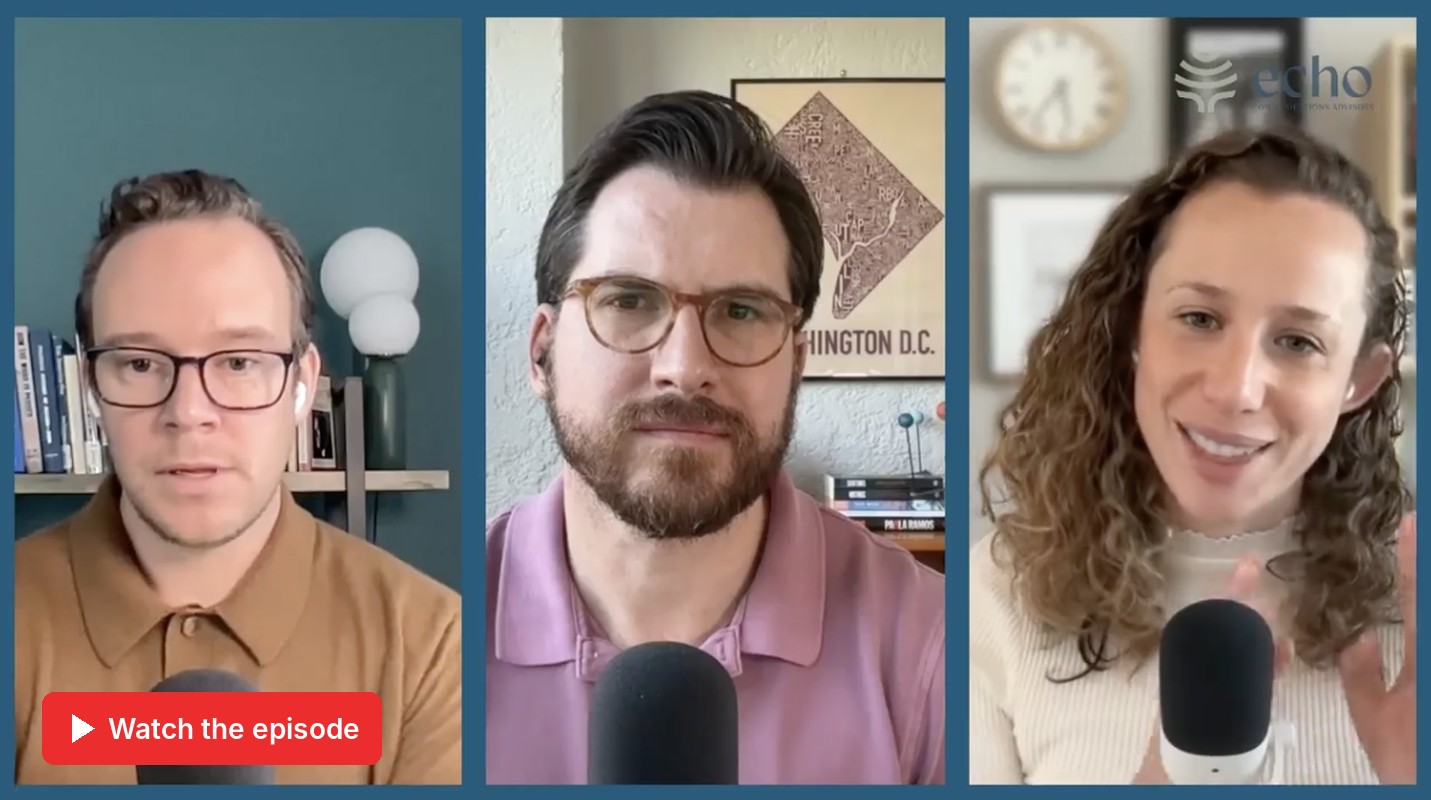
The morning after a blue tsunami, Chris Moyer, Ella Nilsen and Dan Crawford break down Tuesday’s election results and the energy angles: what new Democratic majorities mean for Congress over the next two months and the next two years, why data centers and utilities were on the ballot from Ohio to Georgia, and how the results shape the 2028 race for the White House.
For anyone looking to advance federal and state clean energy policy, these next two years could be a huge window of opportunity. Democrats now hold commanding majorities in both chambers of Congress, voters made energy costs and data centers ballot-box issues, and new leaders are taking over in governors’ mansions, state legislatures and utility commissions.
Here’s what we cover:
- Election night: Democrats win the House by 10 p.m. and the Senate by 11:30, with flips from South Carolina to Iowa and James Talarico’s win in Texas. Starting in January, Democrats will hold at least 54 Senate seats and north of 250 House seats.
- Energy’s winners and losers: Rep. Kathy Castor, a leader of the Sustainable Energy and Environment Coalition, survives a redistricting push, while anti-wind Rep. Jeff Van Drew loses, and so do pro-clean energy Republicans Mariannette Miller-Meeks and Brian Fitzpatrick.
- Data centers and utilities on the ballot: How Sherrod Brown and Gina Hinojosa turned data centers into a weapon, Democrats’ new majority on Georgia’s Public Service Commission, Michigan’s ban on utility political donations, and why utilities may be the night’s biggest losers.
- Permitting reform and the next two years: Why a lame-duck permitting deal looks increasingly unlikely, how Hakeem Jeffries’ huge margin changes the House, and whether Trump works with a Democratic Congress or vetoes everything.
- The 2028 race: What the results mean for AOC, Talarico, Jon Ossoff, Josh Shapiro and Wes Moore, and why JD Vance may have had the worst night of anyone.
New to the show? (Aren’t we all, at this point?) Watch our 2-minute trailer to hear what the Echo Chamber is all about. The show skips the jargon and focuses on the politics shaping climate and clean energy in Washington and beyond.
In Their Words
“I do think Democrats should be a little bit concerned about just being the dog that caught the car here. They spent the past two years running on affordability … and it is very hard to lower prices.”
Dan Crawford, Echo Chamber co-host
Subscribe Wherever You Listen



New episodes every other week on Spotify, Apple Podcasts and YouTube. Next up: we’ll be recording from Las Vegas at RE+ and releasing the episode on November 19. Planning to be there? Reach out.
About the Hosts
- Chris Moyer has advised three U.S. senators, including U.S. Senate Majority Leader Harry Reid during his 2010 re-election, and was New Hampshire communications director for Sen. Cory Booker’s 2020 presidential campaign.
- Ella Nilsen is a former CNN climate and Vox politics reporter who brings years of experience in investigative and national political journalism.
- Dan Crawford worked on the 2008 and 2012 Obama campaigns and in the Obama administration, and has a long background with issue advocacy groups.
Full Episode Transcript
Chris Moyer: Welcome to the Echo Chamber podcast, presented by the Carbon Removal Alliance, alongside Ella Nilsen and Dan Crawford. I’m Chris Moyer. On today’s show, we have all the election reactions from Tuesday night’s elections across the country and the energy angles. What does this mean for Congress? What does this mean for state capitals and permitting reform, over the next two months but also the next two years? And the 2028 presidential primary is officially underway, or maybe unofficially. What did last night’s results mean for that campaign for the White House? But first, how did everybody spend election night? And I should say that we are recording on Wednesday morning, so election night was last night.
Ella Nilsen: So it was my first time not covering an election night in probably a decade. Instead, I finally went to the movies and saw You Can See Everything, the Nathan Fielder documentary about Elizabeth Holmes, which very much plays with what is real and what is not, kind of fungible realities. It’s a great movie, by the way. Everyone should go see it. But I get out of the theater, it’s probably about 10 o’clock at night, and I look at my phone and I’m getting texts like, “My God, Dems picked up a Senate seat in South Carolina.” And I’m like, that can’t be real. So I got out of this crazy reality documentary and was like, I’m in a new world. Once I saw that Dems had won the South Carolina Senate seat, I was like, okay, it’s over.
Dan Crawford: I went to the Invest in Tomorrow “Don’t Mess with Solar” watch party last night. There were a lot of energy folks there. Vibes were good.
Ella Nilsen: What were the vibes, Dan? How were people feeling?
Dan Crawford: It was loud and crowded. I had an IPA. Thank you to Jigar Shah for buying my IPA. I have a hard time on election nights. I feel like I have to be locked into the results, which really helps nobody and doesn’t do me any good. So I left kind of early so that I could spend some time with the real sickos who were just watching MSNBC and looking at the New York Times needle.
Chris Moyer: So you’re talking about me. I feel very, very seen there. Truthfully, I had planned to join you at that party last night with the energy community here in Washington, but the babysitter canceled at the last minute and I was, I say, “stuck.” I was actually in the place that I would prefer to be on election night: watching on TV, locked in, as you say, Dan. And obviously affecting all the outcomes by doing that.
Ella Nilsen: I’m curious if you guys also still feel a little sick to your stomach whenever you see the New York Times needle in any form.
Dan Crawford: You can’t be mad at the needle.
Ella Nilsen: I’m not saying I’m mad at the needle. I might have a little PTSD from the needle.
Dan Crawford: The needle is just a reflection of reality. You have to be mad at reality. The needle has been with me on good nights and bad, through thick and thin. So no, I’m very pro-needle. I remember in 2020 getting home from work at like one in the morning and sitting there on my phone watching the needle in Georgia flip to Democrat. That’s probably my strongest needle memory.
Chris Moyer: I just think it was nice to know the results fairly early last night. I didn’t go to bed or wake up this morning wondering, is that decisive Senate seat gonna flip? Ella, like you said, the call for the House came around 10. The call for the Senate majority for Democrats came around 11:30. And there was just a string of calls, from South Carolina being the first one, to Adam Hamilton in Kansas, to James Talarico in Texas. To me that was the biggest moment of the night. It was like, my God, I can’t believe this is happening, with a governor’s race in Texas and then Talarico right around the same time. And then we’re on a roll after that, with Josh Turek in Iowa being called, Sherrod Brown shortly after that, and then that’s the Democratic majority.
Democrats had to pick up four seats, given the vice president is JD Vance. And with two outstanding races that could very well go to the Democrats, they have picked up seven. Now we’re looking at at least 54 Democrats in the Senate. And if you add two more to that and get to 56, I never thought we’d be within sniffing distance of a filibuster-proof majority in my lifetime ever again. We can talk another time about the 2028 Senate map, but there is a more realistic chance than one would have thought very recently that 60 seats is actually in play. But that’s a conversation for another time.
Let’s take a look at some of these races that are really relevant for energy, starting with members who have been really focused on energy policy. Let’s start federally. Rep. Kathy Castor from Florida, in a Tampa-area district, was supposed to be drawn out of her seat by the redistricting effort from Gov. DeSantis and the legislature. She ended up winning by several points in what’s a Trump plus 12 or 14 district. She held on. She’s notable as a leader of SEEC, the Sustainable Energy and Environment Coalition, which put out a big report about two months ago with policy ideas on energy, climate and sustainability for the next Congress to address.
Some of the biggest anti-renewable members lost. Some of them are also Freedom Caucus members, and that caucus has really seen a lot of its members lose. We’re talking about Jeff Van Drew, the anti-wind guy from New Jersey; Victoria Spartz from Indiana; and, in a race that isn’t called yet but could go against her, Lauren Boebert, a pretty well-known congresswoman from Colorado. Any reaction to those outcomes and what they might mean for the opposition to renewable energy in Congress in particular?
Ella Nilsen: I think it was interesting, Chris. Not all of the names you mentioned, but some of them are more conservative Republicans. But there was a faction of pro-clean energy Republicans that just got totally wiped out last night. Mariannette Miller-Meeks from Iowa was, I think, most recently chair of the Republican caucus on climate and clean energy issues. She lost her seat last night.
Chris Moyer: She had financial support from pro-clean energy interests, too. They were spending for her, even though she did ultimately vote to get rid of the tax credits.
Ella Nilsen: And then on the other side, Rep. Brian Fitzpatrick of Pennsylvania, one of the lone Republicans who voted against Trump’s tax bill, also lost his race last night. What you see in that is certainly a loss for pro-clean energy voices on the Republican side of the aisle in Congress. But at least for the next two years, it doesn’t really seem to matter, because Democrats have such a massive margin that they don’t really need Republicans.
Dan Crawford: Yeah, you’re definitely starting to see the clean energy industry push its weight around a little bit. I mentioned that I was at the Invest in Tomorrow “Don’t Mess with Solar” watch party last night. They are starting to play in specific races and starting to say, hey, clean energy is a constituency that you should pay attention to. We’re going to campaign for people who vote our way and campaign against people who don’t. And we saw that play out across a lot of these races last night.
Chris Moyer: Yeah. There was also a lot of interest in data center policy and how voters would react to where their elected officials are on these issues. I think three states in particular are really relevant for data center policy in terms of reading the tea leaves on how voters are responding. First, the Ohio Senate race, where Sherrod Brown won. He beat the appointed senator and former lieutenant governor, Jon Husted, who in his previous role was laying out the tax incentives for data center developers to locate in Ohio. That was an issue Sherrod Brown used against him to great effect.
Second, the Texas gubernatorial race, where Gina Hinojosa used the issue of data centers very well against Greg Abbott, who a year ago was saying that Texas would be the epicenter for data center development. And another race in Georgia, with former Atlanta Mayor Keisha Lance Bottoms, where ads ran in the final days from both sides about data centers. That sends a signal to state legislators, and also federally, about how to proceed on an issue that’s very unsettled politically. There’s no clear Democratic position or Republican position on data centers.
Ella Nilsen: Yeah, and Chris, to your point about Texas, there was such a fascinating dynamic there around data centers, because it was rural voters, voters you would think of as the most reliably conservative or Republican, who were really pissed at Greg Abbott for basically pushing data centers and pro-AI policy down their throats without asking. And similarly in Georgia, you mentioned the gubernatorial race there. Another more under-the-radar but, I think, equally important result was that Democrats finally flipped the balance of power on the Georgia Public Service Commission, and now have a 3-2 majority there. That has massive implications for Georgia Power’s utility plan, whether they’re going to build power plants or expensive new infrastructure, and also how data center growth is managed in Georgia. The PSC has enormous sway over that.
Dan Crawford: Yeah, and meanwhile in Arizona, you had the Arizona Corporation Commission, where Democrats are on track for victory in two seats. And then in Michigan, voters approved a ballot initiative that bans investor-owned utilities from donating to state politicians. I think it just goes to show that voters are starting to pay attention to some of these smaller races and some of these more nitty-gritty issues, and really want to have a say in how energy policy is managed in their states.
To your point about data centers, Chris, and we’ll get into this when we talk about what the next couple of years look like for policy, data centers are one area where newly elected Democrats can actually have an impact at the state level. I think we’re going to see a lot more involvement in regulating and investigating data centers and their power and water usage. I think we’re going to see more data center moratoriums and more attempts by state-level Democrats to have some impact on prices by regulating data centers.
Chris Moyer: Do you think utilities are kind of a big loser from last night?
Ella Nilsen: Very much so. We often talk about this, especially in terms of data centers and energy usage, in more technical, energy-first terms. But there’s also just corporate accountability for utilities and for big hyperscaler companies. I think people are just fed up with the idea that they are falling behind on the economy while big companies, whether oil and gas companies or hyperscalers, are recording big profits. Same with utilities posting massive profits while people just can’t pay their electricity bills. This strikes at the heart of what people see as fair and not fair.
Chris Moyer: Yeah, I think as Democrats take power in different positions, federally and in the states, they’ll realize that in practice, governing and actually improving some of these cost issues is quite challenging. They’re going to need a villain, and Democrats are for the most part already not shy about going after utilities. But increasingly you could see more of an issue being made of the roadblocks utilities put up to taking actions that would actually help reduce rates for customers. I wonder if we’ll see more ballot initiatives in future elections as well, like the one in Michigan.
Dan Crawford: Yeah, fairly or not, utilities are the entity responsible for raising your electric rates. So when people are looking for someone to lash out at about their high electricity bills, the first entity they’re going to look at is the utility, because they’re the one sending them the bills.
Chris Moyer: So what do Tuesday’s elections mean for Congress over the next two months and also the next two years? Let’s start with permitting reform, because that’s been the big energy issue in Washington. I feel like things are not looking good for permitting reform happening in the next two months. Am I off on that?
Ella Nilsen: No, it feels like the wheels have been coming off for a while. But I think the size of the win last night maybe solidifies that.
Dan Crawford: Yeah, permitting reform always had an uphill climb. We have talked on this podcast about how releasing the bill before the election and waiting until the lame duck to vote on it gave opponents an opportunity to really pick through it and stake out their opposition. And I think that’s just been supercharged. Even before Tuesday, we started to see some of the bigger environmental NGOs and organizations come out either in full opposition or criticizing large parts of the bill. You started to see criticism around some of the provisions on tribal sovereignty. And then of course you had Democrats in the House and the Senate saying, hey, we’re going to win on Tuesday, why don’t we wait and try to get a better bill once we take the majority?
Chris Moyer: It does feel like the messaging points against the bill are solidifying, and there are groups, entities and voices coalescing around those and repeating them, and they seem to be sinking in a little bit. Then you throw in the huge results this week, and you start to understand what Congressman Huffman was saying weeks ago. It’s so interesting: when you try to predict intellectually how you’ll feel after an election result, it’s not the same as actually feeling it. Things feel a lot different today than the mere idea of a big win did. And I think you’re right, Ella. The size of this win really changes the feeling and the sentiment about what is possible.
And we should get into how Trump treats the next two years, because I think that’s more interesting. He’s such a wild card here, and he’s unpredictable most of the time. Just saying he’s going to veto everything kind of misses the possibilities that the next two years bring.
Ella Nilsen: Yeah, I was going to say that all of the arguments you guys were making about the various coalitions are really on the Democratic side of things. And we had already seen some behind-the-scenes machinations from the White House, specifically on offshore wind. There were some last-minute attempts from the Trump DOJ to challenge projects that were near completion, and it seemed to be a hardball negotiating tactic aimed at Sheldon Whitehouse, a New England Democrat.
To your point, Chris, I don’t know what Trump’s going to do. We’re the morning after a truly historic election. This isn’t energy policy-related, but it seems like he’s not going to challenge the results of the election, or at least that’s what he’s publicly said so far. But I honestly don’t know if this is going to make him double down and say, I don’t want to work with these guys, or whether he’s a bit more open to it because this is such a rebuke of his party and of him.
Dan Crawford: I feel like there was a brief moment in 2018 after Democrats won where Trump was going to start working with Schumer and Pelosi, and they were going to have this great relationship, and he was going to be the president of deals. And that didn’t last very long.
Chris Moyer: Yeah. And this is the argument, I’m not saying I fully subscribe to it, but if you were to make the case for the version of Trump where productive things actually happen in Washington over the next two years, it’s that he wants to rehabilitate his image a bit and get some wins in his final two years. He also just wants to be liked. He doesn’t like not being liked, and he doesn’t like not getting attention. If he’s just blocking everything, or seen as not the main center of power, he’s not going to like that. So what can he do? Maybe that’s engaging with Democrats. And he’s not ideologically pure. He doesn’t have a clear position on most issues, frankly, that keeps him from agreeing to something that others in the traditional Republican Party would never agree to.
So there is a world in which he does engage. The question is whether the oversight effort by Democrats blunts any willingness to come to the table on bills that get big support in the House and Senate. It’s funny, Politico was doing a live election show last night and they just said, hey, why don’t we try calling the president live on air? So they did.
Ella Nilsen: Always works.
Chris Moyer: The White House operator connected Dasha Burns to the president, and they just chatted on air. Trump seemed to say, yeah, they’re going to investigate, but I can work with Democrats. One thing he says one day doesn’t necessarily mean it’s true the next, but it is something to watch over the next two years.
Ella Nilsen: The other thing we haven’t really talked about, which has come up on the periphery of the morning-after election results, is how data centers and the big tech companies come into all of this, whether it’s on permitting reform or otherwise. They have aligned themselves so strongly with Trump, and he has aligned himself so strongly with them, at his peril, I think, because voters really still do not like data centers. There have been a lot of shocking headlines about AI and the implications for the future of work and for students learning, and there’s an absence of any legislation or guardrails.
I’m really curious whether Democrats are going to be calling Sam Altman and Dario Amodei into hearings, and what that looks like from the posture of the companies themselves. Whether there’s a slowing of the pace of development, or, on data center and energy policy, I think there’s going to have to be more sweeteners for communities, not just this idea of things getting jammed down people’s throats. That’s going to be really interesting to watch as well.
Dan Crawford: Yeah, and turning to the House, one thing that’s interesting is just how big the margin is. Before Tuesday, depending on where you were coming from, there was either some concern or some excitement around the ascendant left wing of the party and the idea that it was going to be the deciding vote on a lot of things, including the speakership. Now, with potentially 255-plus members in the Democratic majority, Leader Jeffries just has a lot more room to run and get some big things done without having to be beholden to one part of his caucus or another.
Chris Moyer: Could you have had a better night if you’re Hakeem Jeffries, the presumptive next speaker? He could not have had a better night, not just in winning the majority but with this margin. Like you mentioned, it’s 250-plus, and it could be 260. You need 218 to pass a bill in the House, so he could lose 42 members of his caucus. Let’s say the farthest left didn’t support something; he could still get a bill passed. Or if other groups didn’t like something, he could still get a bill passed. It’s incredible flexibility that makes his life easier going forward.
Dan Crawford: And it dilutes the power of any one member, and makes it so that you’re not going to have either a far-left bloc or a moderate bloc standing in the way of legislation.
Ella Nilsen: What do you guys think about whether there’s any chance that Democrats, leaving aside permitting reform, try to take up and succeed at passing any sort of tax credits or anything else that was cut out of the IRA and bring that back in the next two years? Or is that a post-2028 thing?
Chris Moyer: My view is that Democrats can’t wait for post-2028. They are clearly being given power, and voters across the country will understand that Trump’s still president, but he is diminished because of what voters did this week. Democrats have a lot of power and control, and they have to do something with it now, or else it’s just going to go back and forth. Democrats can’t necessarily meaningfully reduce prices in the next two years, but there’s this typical posture you would fall into where it’s like, we’ll just tee things up for when we get a president of our own party in two years, and then we’ll actually pass things. I don’t think they can take that approach. They have to show some results and deliver.
Dan Crawford: Yeah, they’re at least going to have to pass legislation. Whether or not the president signs it is a different matter, but they’re going to need to pass bills, and then they can go home and campaign on them. They can say, hey, the president vetoed this, it’s on him, he owns this. Give us a Democratic president and reelect me, and we’ll make sure this bill gets signed next time around. I’m curious how much energy they put into legislation. Are they going to try to get some version of restoring the IRA tax credits that Trump will sign, or are they just going to pass straight-up messaging bills for the next two years and hope that’s enough for voters to reelect them in 2028?
Chris Moyer: And just to add one more thing, the political dynamics are really interesting. Writ large, how does the Republican Party handle last night, and how do they deal with Trump? This could be a real turning point. We’ve suspected that could happen many times over the last 10 years, and it hasn’t. But this actually could be it. And bills that Democrats try to pass could get bipartisan support. Look at someone like Lisa Murkowski, who has generally been inclined to seriously consider Democratic bills. She’s up for reelection, and she’s seeing what’s happening in her state with Mary Peltola and Dan Sullivan, who, as of this recording, are in a very tight race. Regardless of how that goes, she knows it’s going to be a tough race for her in two years, and she has to deliver for people. Otherwise, she’ll be thrown out.
It’s hard to find too many more of those people, but Sen. John Curtis is someone who could vote for some of these bills. Shelley Moore Capito just won reelection last night, so she has some leeway, and the next time she’s up, in 2032, the political environment for the Republican Party is going to look so much different. So there are some interesting dynamics where there could be bipartisan support for common-sense energy affordability bills and other legislation that would make it harder for Trump to veto.
Dan Crawford: I do think the real action on affordability is going to be in the states.
Ella Nilsen: Yeah, I agree.
Dan Crawford: You’re going to see rate freezes, you’re going to see data center moratoriums, you’re going to see governors and state legislatures taking a very active role in energy prices and utility policies, and trying to push more distributed energy. That’s really where Democrats can move the needle on energy affordability, to the extent that anybody can. We’ll see if state-level policy is enough to make voters feel like their affordability concerns are being heard.
I do think Democrats should be a little bit concerned about just being the dog that caught the car here. They spent the past two years running on affordability and saying they’re going to do something about prices. And it is very hard to lower prices. It’s not even really advisable to lower prices. It’s very hard to slow inflation. We’ll see in two years whether Democrats have to go back to voters and say, give us the presidency and we’ll really do something about prices then, and whether that’ll be a winning argument.
Chris Moyer: Yeah, I don’t think they can wait. They have to do as much as they can to, at the very least, force Trump to veto bills, to show that he’s the impediment, and therefore if we get the White House, we can actually get these things done and improve affordability for people.
Dan Crawford: Yeah, it’s going to be very hard for the president to veto something called the Lowering Prices for All Americans Act or something along those lines.
Chris Moyer: So if you just name it right, it’s a glide path to the president’s signature? Because with the Inflation Reduction Act, you would have thought, why would Trump want to undo the Inflation Reduction Act?
Dan Crawford: I know, right? It’s funny the way every big bill now has to have “and Jobs” in it, like the Tax Cuts and Jobs Act.
Ella Nilsen: You just need a J in that acronym, a hard consonant, to keep things moving.
Dan Crawford: Yeah, exactly.
Chris Moyer: Well, let’s turn to 2028 and what all of this means for the presidential campaign trail, which is really the next big thing that’s going to capture the attention of political observers. AOC is one of the winners from last night, I think, given the results in Michigan in particular. And when you think about the redemption arc here for Chuck Schumer, Schumer could run for reelection and have fewer issues than we suspected, which makes that path less appealing for AOC. Twenty-four hours ago, we didn’t necessarily know which direction she might go. I think it’s more clear after this that she runs for president.
Ella Nilsen: So Chris, to your point, I do think that Abdul El-Sayed’s win in Michigan is a huge boon for AOC. It’s a big win in an important Midwestern state. The other thing we haven’t talked about as much is the massive wins for Democrats in Texas, especially in areas along the border, and the fact that immigrant communities wholeheartedly rejected Trump and Republicans because of daily ICE raids and feeling completely unsafe and terrorized in their own communities. So beyond the traditional Democratic strongholds in Michigan and the Midwest, this idea of expanding into Sun Belt states, and the opportunity in Texas and other states across the South, is going to be really interesting to see going into 2028.
I’ll return to coming out of the movie theater and my total shock at seeing that Democrats had flipped a Senate seat in South Carolina. South Carolina is going to be the first state on the primary calendar in 2028 for Democrats. And in Iowa, where Democrats flipped both the Senate and gubernatorial seats, Republicans are going to have to find their footing with farmers who are pissed at Trump over high diesel and fuel prices. Chris, I’m really curious about your thoughts on what the Republican field looks like coming out of Tuesday’s tsunami.
Chris Moyer: I think I’d rather be anyone other than JD Vance right now. If he wanted to be president, the best thing for him would be to resign the vice presidency. Otherwise, he’s not going to get any separation from Trump, unless Trump somehow becomes really popular, maybe by signing all these great bills that Democrats pass and rehabilitating his image. I don’t know how far that goes. Marco Rubio’s stock probably goes up after this week’s elections. And I think there’s a great chance for somebody like Brian Kemp from Georgia, who has famously maintained distance from Trump in some previous elections and has been a big supporter of EVs and clean energy in his state. There’s so much happening manufacturing-wise in Georgia.
Kemp declined to run for Senate this cycle. He would have made it a much tougher race, though he honestly probably still would have lost to Jon Ossoff in this environment. But he’s somebody who is probably going to take a look at this. There’s a whole host of other Republicans, maybe some governors who have maintained some distance from Washington and balanced that line with Trump, who could emerge as a fresher voice for the Republican Party going into 2028.
Dan Crawford: Yeah, I think you’re going to have two lanes. You’re going to have JD Vance and, to an extent, Marco Rubio, who are really trying to capture the MAGA coalition and say, let’s keep going with Trumpism, let’s keep going with MAGA. And then you’re going to have the Christies and the Kemps, who want to turn the page on Trump and go back to, not necessarily a moderate, but at least a more traditional Republican Party, like the Republican Party of the Obama era. It remains to be seen where Republican primary voters will lean. Primary voters tend to be more extreme than the general electorate, so it could be that the MAGA coalition holds strong and nominates a MAGA champion in 2028. But I think you’ll see a much louder chorus for the turn-the-page folks after last night’s election.
Real quick, back to AOC. One thing that’s really important to look at is that she was very smart about who she campaigned for and where she campaigned this year. She got a ton of flak for not endorsing some further-left candidates around the country, and she has really tried to play nice with the Democratic Party and with leadership. I think she’s been very smart about moderating her tone, if not necessarily her policies, in a way that makes her more appealing to primary voters and to the general public.
Chris Moyer: So thinking about winners last night, is there anyone who won office for the first time, not reelection, who could turn around and run for president in two years? Obviously Talarico would be atop that list. You think about El-Sayed in Michigan. Jon Ossoff ran for reelection and won, but he’s going to get a lot of attention, and now that there’s going to be a Democratic governor in Georgia, if he were to run for president, the governor could appoint another Democrat to fill his Senate seat. So that frees him up a little bit if he decided to go for it. Someone else who won big last night is Josh Shapiro, the governor of Pennsylvania. He was putting a lot more effort and resources into flipping seats that were not his own, House seats and state legislative seats, and seemed to have a pretty good night there, which helps his stock. So how did any of these first-time winners or reelected folks fare as you look toward 2028?
Dan Crawford: I think everyone you mentioned came out looking really good last night. Shapiro just absolutely dominated in Pennsylvania. Wes Moore is another governor who handily won reelection. Talarico is going to be two years into his Senate term, but you have to imagine he’s looking at getting reelected in Texas and thinking, is this something I want to work toward, or should I seize the moment and run for president now? I wouldn’t be surprised if he decides to go for it, because it will be such a tough reelection once the political winds shift back.
Chris Moyer: And it’s interesting, because eight years ago, Beto O’Rourke narrowly lost but was then very much encouraged to run for president, and he did. He obviously didn’t fare so well in that race. But Talarico won. Theoretically he could run in two years and, if he doesn’t win, have four years to recover and fix any problems that might have arisen from that race to position himself for reelection in 2032. I want to hear what you have to say on this, Ella, but I think there are moments of opportunity where you want to strike while the iron’s hot.
Ella Nilsen: Yeah, I do think that Talarico is this really fascinating new kind of Democrat who could do really well on a national stage, and I’m sure that has to be entering into his and his team’s minds. But on the other hand, I also think Democrats are going to want to build on this incredible momentum they had in Texas last night, rather than wholesale abandon that in two years’ time. Some could argue that’s equally worthy of time and effort, rather than saying, okay, I’m going to be one of 15 guys running for president.
Chris Moyer: Could you say more about what you mean by abandoning?
Ella Nilsen: Maybe not abandoning. I just don’t know how voters would react to somebody being in the Senate for two years and then immediately moving on to other pursuits.
Chris Moyer: I don’t know, Obama might have some thoughts on that.
Dan Crawford: Yeah, I was going to say, there was one freshman senator who did it quite famously.
Ella Nilsen: That’s true, that’s true. This is me outing myself as being in high school during that time.
Dan Crawford: It was too fresh. It wasn’t his turn.
Chris Moyer: Yeah, that’s the Republican approach, “it’s your turn.” Democrats usually win when they take the opposite approach. So I think it’ll be very interesting. The calls are going to start coming pretty quickly, if they haven’t already, frankly. And it’s not just the fact that Talarico won, but the margin. I don’t know what the final numbers are, but the margin is larger than what anyone could have really anticipated.
Dan Crawford: And he cultivated a national base. He got a ton of money from Democratic donors across the country. He was this national star. That, coupled with the decisiveness of his win, sets him up really well.
Chris Moyer: And he sounds new. He doesn’t sound like your typical Democrat or your typical politician. It’s refreshing. The same goes for Ossoff in a different way: the pressure to run, even if they insist they’re not, is just going to mount and mount. It’ll be really interesting to watch, and we’ll certainly be talking about it in the weeks and months ahead. Any final thoughts before we wrap up? I feel like we could talk for hours about everything that’s happening this week.
Ella Nilsen: My final thought is, I’m a policy nerd. It’s fun to have a fun election night, but to the points we’ve all been making, there are thorny policy issues ahead. I think this election was voters demanding policy changes, so we’ll have to see if that materializes over the next two years. I’m not so sure that it will.
Dan Crawford: I hope that Democrats don’t lose sight of the real challenges within the party and within the coalition that they have faced. I think they took advantage of a moment where the Republican president was historically unpopular, and they did run a good campaign around affordability and around corruption. But I hope the size of the win doesn’t encourage Democrats to sweep their problems under the rug. I hope they learn the right lesson, which is that they won by expanding the tent, by finding candidates who fit the state and the district they were running in, and by not having such a narrow view of what a Democrat has to be.
Chris Moyer: Yeah, I’d say, bigger picture, I just feel like no person deserves such a rebuke, such a repudiation, as Donald Trump does for everything he has done in this Trump era. And it is very satisfying to see voters across the political spectrum and across the country delivering that last night. You kind of have a different view of things right now than we did maybe 24 hours ago. There are consequences to all this corruption, to all this bad policy, to all these things that would never have been acceptable in previous times in terms of behavior. So bigger picture, that’s more than just energy, but it’s good to know that’s how a lot of people across this country feel.
Well, we will end it there, and we appreciate everyone listening. We’ll be back in two weeks with an episode we’ll be recording in Las Vegas, from hotel rooms at RE+. Please reach out if you plan to be there. And if you enjoyed today’s show, please subscribe. We’re available on Apple, Spotify and YouTube. Subscribe, rate, review. It really helps to get the word out about the show. In the meantime, you can stay up to date on the latest happenings in Washington and across the country in energy policy and politics by signing up for our newsletter at echocomms.com/echochamber. We will talk to you in two weeks. Thanks, everybody.
Where energy and politics collide
Chris, Ella and Dan dig into the bare-knuckle politics shaping clean energy. New episodes every other Thursday.