Chris Moyer
Founder & President
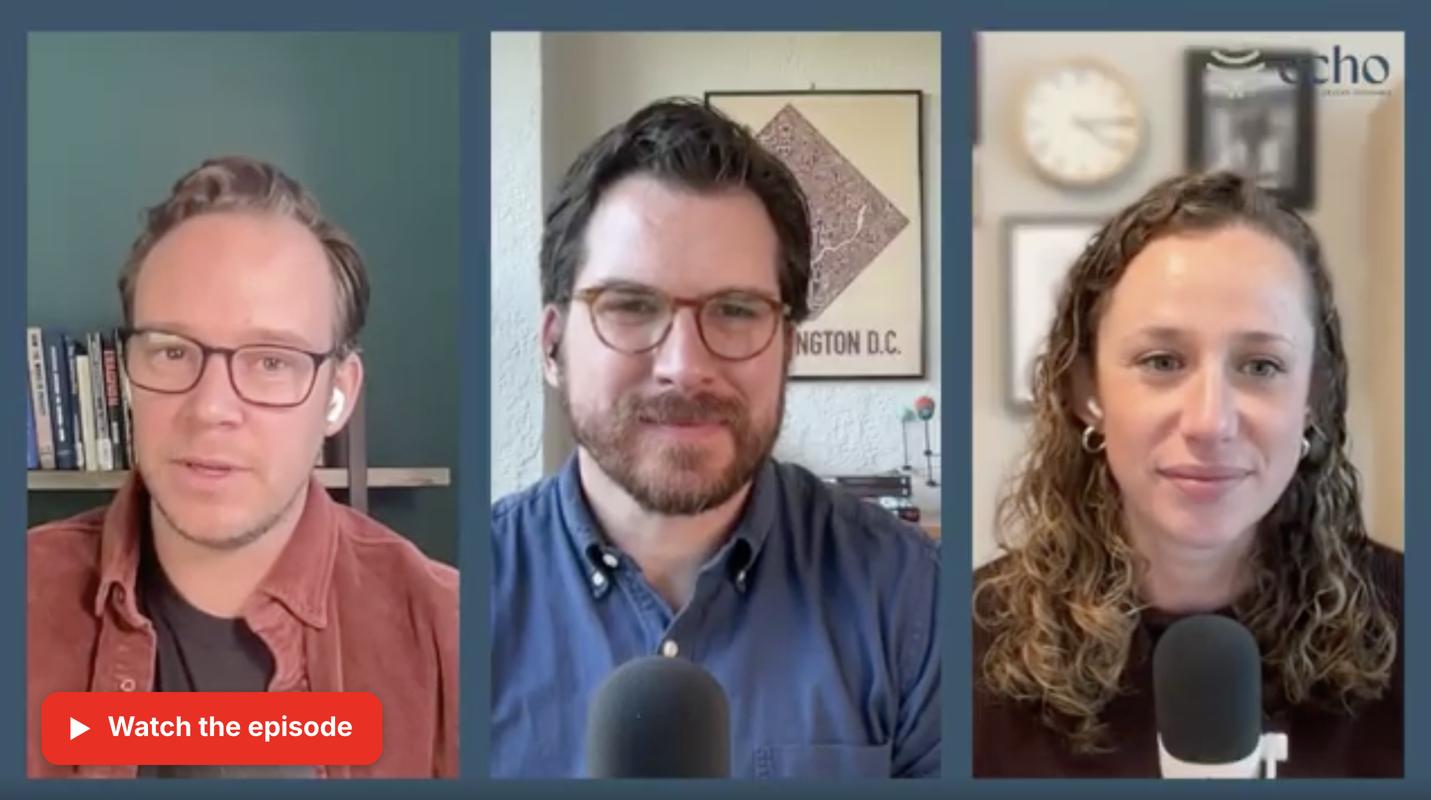
Episode 1 of the Echo Chamber lands less than two weeks before the midterms. Chris Moyer, Ella Nilsen and Dan Crawford dig into the energy fights shaping the election, then Punchbowl News’ Josh Siegel joins to discuss the latest on permitting reform. Here’s what we cover:
- The midterm map: Democrats lead by 11 points in the final New York Times poll and are running hard on energy affordability
- A Democratic majority: What it could mean for energy policy
- Permitting’s biggest threat: A 2028 candidate’s perilous messaging for permitting proponents
- Josh Siegel of Punchbowl News: Where the permitting bill stands ahead of the Nov. 9 Senate vote
New to the show? (Aren’t we all, at this point?) Watch our 2-minute trailer to hear what the Echo Chamber is all about. The show skips the jargon and focuses on the politics shaping climate and clean energy in Washington and beyond.
In Their Words
“There is a recognition that [utilities are] maybe on the defensive and that electricity prices are rising, people are blaming utilities … I think they know that they’re not in a position to … kill this thing or remove entire parts of the grid package.”
Josh Siegel, energy reporter, Punchbowl News
Subscribe Wherever You Listen
Listen on Spotify · Listen on Apple Podcasts · Watch on YouTube
New episodes every other Thursday on Spotify, Apple Podcasts and YouTube. Next up, Thursday, Nov. 5.
About the Hosts
- Chris Moyer has advised three U.S. senators, including U.S. Senate Majority Leader Harry Reid during his 2010 re-election, and was New Hampshire communications director for Sen. Cory Booker’s 2020 presidential campaign.
- Ella Nilsen is a former CNN climate and Vox politics reporter who brings years of experience in investigative and national political journalism.
- Dan Crawford worked on the 2008 and 2012 Obama campaigns and in the Obama administration, and has a long background with issue advocacy groups.
Full Episode Transcript
Chris Moyer: Welcome to the Echo Chamber podcast, alongside Ella Nilsen and Dan Crawford. I’m Chris Moyer. On today’s show, we’ll be joined by Punchbowl News’ Josh Siegel to share all the latest on permitting reform. New data shows energy inflation is soaring. Will Democrats win both the House and the Senate in just under two weeks? And we’ll talk about how one likely 2028 presidential candidate is approaching permitting reform and why his message should frighten the bill’s proponents. Also, we released a trailer on Friday that you can check out, hear more about what to expect from the Echo Chamber podcast in the weeks and months ahead.
So Ella, what’s the temperature in your apartment this morning?
Ella Nilsen: We are up to a balmy sixty one degrees in here. which I don’t know how that compares to you guys, but you know I’m feeling pretty good. It was the internal temperature this weekend was in my apartment was fifty seven and that was when we got our first you know, freeze overnight. but yeah, it’s cold in here basically.
Chris Moyer: So is your furnace broken or are you just frugal?
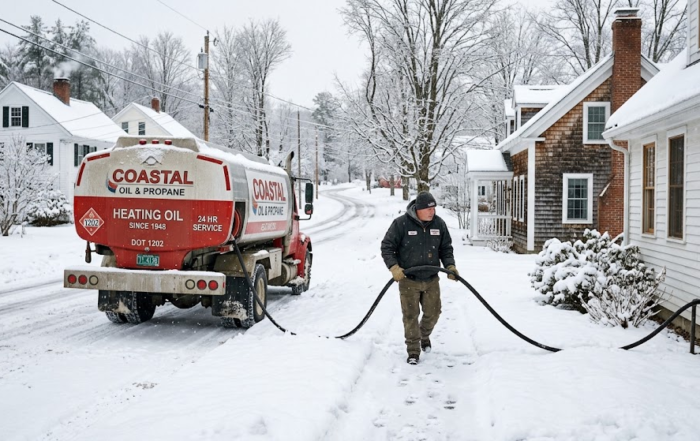
Ella Nilsen: Well, it is still October, which for any good New Englander means just put another layer on before you think about touching that thermostat. but I think that this year in particular, like those frugal tendencies are being like supersized because I don’t know if you guys have heard, and you heard it here first in the Echo Chamber newsletter, but heating oil in New England is quite expensive.
it’s probably I mean, like my bill and you know, other people’s bills who heat with oil are probably going to be double because literally because of the war in Iran and everything that’s happening in the Middle East. so yes, I I s this I know this has become like a running joke on this this podcast and on this team. I still have not bought heating oil. I do have a little bit in reserve from last year.
but we’re seeing how long we can go from the first the first thermostat turn on.
Dan Crawford: We turned our heat on.
Ella Nilsen: Wow, Dan, you’re so weak. No, you have you’ve got kids.
Dan Crawford: Says more about the quality of our windows than anything else. As soon as it drops below sixty, our house just gets freezing.
Chris Moyer: I also turned on the heat. I also have a a kid who is about fourteen months old. were it just my wife and me and our dog, it would not be on until my wife bugged me about it enough. but once it gets down to you know, for the baby in the you know, the sixties that’s not really a tenable situation.
Ella Nilsen: Although your house was built in this century, so I feel like you should have slightly better windows and insulation than me.
Chris Moyer: You know, it seems the windows maybe haven’t caught up or stayed you know, ahead of the times when it comes to insulation and and and keeping some of our air the temperature should be. But Ella, we should stipulate for folks who are who are tuning in, don’t know you and us, like Dan and I are based in D.C. You’re yes as of the last year or so back in New England, you’re in Boston. And so home heating oil is kind of a a thing that we in D.C. don’t deal with that yet you certainly do.
Ella Nilsen: Yeah, it it was a new thing when I moved back last year because like in D.C., I mean, most people I think heat with gas. Maybe some people have heat pumps and heat with electric. but yeah, in D.C., like your gas is piped into your building via a pipeline. You like never really think about it or see it. And in Massachusetts and a lot of New England states, I think that New England and the Northeast is really the only major region that heats predominantly with with heating oil. but
Yeah, I mean you literally like you don’t some obviously some houses still have gas, but a lot of us, you know, literally have to have an an oil truck come to our house and and fill up these big oil tanks that are in our basement, which is the situation that I have because I rent. and yeah, it is like it’s kinda nuts. and you just are kinda spend the winter like watching the gauge on your oil tank like slowly go down.
And just like mentally calculating like, okay, what am I gonna have to spend, you know, another whether it’s like five hundred, maybe this year, like a thousand dollars to to stay warm.
Chris Moyer: Or not, you’re choosing not to stay warm and
Ella Nilsen: I mean, listen, I have, you know, I’ve we’ve you know, there are electric heating pads. my preferred method of choice is a hot water bottle that I fill up with a kettle. I’m just making myself sound like I don’t know, like I live in many, many decades ago. I’m I’ve not caught up with modern technology.
Chris Moyer: Well, so this home heating oil issue is is an issue in some of these Senate races. And I know, Dan, wanna hear kind of what you’re seeing when it comes to the midterms in just under two weeks here. But Maine, where there’s a big Senate race, home heating oil is a big issue. other states as well. how is this playing out? And also more broadly, Dan, how are energy issues playing out in these midterms?
Read the full transcript on our website.
Dan Crawford: To no one’s surprise, you know, Democrats are poised to make some pretty good gains in a couple of weeks. you know, the New York Times came out with its final poll of the of the campaign shows that Democrats lead nationally by eleven percentage points, fifty-two to forty-one percent. And that’s when likely voters are asked about the specific candidates for the House in their district, so not just a generic ballot. if that holds up, Democrats will certainly win the House
And they stand a very good chance of winning the Senate. and you know, energy issues have played a pretty big role in campaigns across the country. part of what Democrats’ strategy has been has been kind of embracing a slightly bigger tent than they have in the past. and that holds true for energy as well. You’ve got candidates like James Talarico in Texas and Mary Peltola in Alaska, both of whom have staked out some, you know, fairly heterodox positions on energy issues.
Chris Moyer: Can you define that word for our audience? Because I I’m gonna go look it up if you don’t tell us what it means.
Dan Crawford: Outside the norm.
Chris Moyer: Okay. This is your Ivy your Ivy League showing here. Yeah.
Dan Crawford: Although you know it’s funny because Talarico’s you know he’s been advocating for an all of the above approach to energy that embraces renewables but also makes room for Texas’s oil and gas industry, which really wasn’t that outside the norm for Democrats, you know, 10, 15 years ago. And it’s only recently that Democrats have staked out a really hard line on fossil fuels. And similarly with Mary Peltola, you know, she said very plainly that she wants Alaska to produce more oil. and she’s advocating for for greater exploration and drilling in Alaska. So I guess my question for you, Chris and Ella, you know, thinking about, you know, this this Democratic majority, you know, what does it look like if Democrats win the Senate? but their 50th and 51st votes are much more favorable to fossil fuels than the rest of their caucus.
Ella Nilsen: I mean I guess like I’m getting flashbacks to you know, twenty twenty one and twenty twenty two when the the main person that Democrats had to contend with was West Virginia Senator Joe Manchin, who obviously, you know, came from a a big coal state and also natural gas and was very protective of fossil fuel interests. You know, at the same time, he he like wrote and passed one of the most like transformative clean energy bills in in modern history.
And so I certainly think I think that that just shows like Democrats have been here before, depending on, you know, if if Chuck Schumer remains the majority leader, like he has proved adept at, you know, making sure that that those voices are heard and listened to. But it feels a bit to me like, you know, Democrats have kind of been here before. it will be really interesting to see what what happens post these Senate races. but it’s it’s certainly not like new ground for them to tread.
Chris Moyer: Yeah, it feels like and I think it’s probably gonna be the fifty first and fifty second vote given the the vice president being a Republican for the next two years. But if we’re talking about the next time Democrats have a chance to go on offense, which is potentially you know, twenty twenty nine, if there’s a Democratic president and if they have majorities in in Congress, then yeah, I think, you know, what Ella was describing with Joe Manchin to a a lesser extent maybe on energy stuff, Kyrsten Sinema, you know, these two would be senators, Talarico and Peltola, are going to have a say in these bills and their votes are going to be absolutely critical if they’re going to pass anything. So we’re probably looking at another reconciliation bill because it’s just so hard to get sixty votes on on pretty much anything. And they’re going to make sure that whatever initial version of the bill it becomes a little bit more a little bit more better for oil and gas than it would be otherwise. And so it’s gonna be a really interesting dynamic
obviously Democrats will take that problem, that future problem for a win in those two states, in just under two weeks and deal with the the ramifications of that for policymaking later. But I think there’s no question that you’d rather obviously have those two, like the difference between them and a Republican may not be as wide as, you know, Sheldon Whitehouse and an like a typical Republican, but
It’s gonna lead to better energy policy if you care about clean energy.
Ella Nilsen: Really quickly that I think that this dynamic is kind of like coming up a little bit with permitting because obviously there are things that fossil fuel interests really like in the permitting bill. And I think that Democrats as a party are just sort of leaning on the economics of clean energy being, you know, so cheap in comparison to some fossil fuels and and really just sort of saying, Okay, we’ll take the trade-offs, you know, we’ll we’ll cut the deal. but you know, we we expect that there will just be more clean energy built because the economics are so good. So I’m curious to see that, you know, how that gets replicated in future years.
Dan Crawford: That’s maybe a good segue to talking about permitting reform, which is being touted as an affordability play. Obviously Democrats are running, you know, very hard on affordability issues in this campaign and have kind of made affordability a centerpiece of their agenda.
and the truth is that it’s pretty hard to do anything at a federal level about prices. and permitting reform might be one of the few things that a democratic majority can do. But of course there’s a bill being considered now that will presumably get a vote in the lame duck. Do we think that that will move the needle on affordability? And do we think that it’s Democrats’ best play to get this passed before they take majority?
Chris Moyer: Well, I think just stepping back for a second, broadly the Democratic challenge, if they are successful in the midterms, is when they’re actually governing and trying to deliver on their promises of making energy more affordable, of lowering utility bills. We saw last year when Abigail Spanberger in Virginia and Mikie Sherrill in New Jersey, they were really the first candidates to take on this energy affordability issue. It it really hadn’t crept up as a salient political issue until last year.
they both won their races and now they’re I would argue that they’re poor probably more adept on energy issues than they ever thought they would be two years ago or any time before. And as a governor you can do more as the executive, but it’s still really hard to make changes to the energy system that bring prices down. Now you’re gonna talk about Congress, which that’s even harder. So the I think you identify the challenge, Dan, very well that it’s gonna be
it’s gonna be hard to deliver on the promise of energy affordability. And they’re going to be, you know, members of Congress who take if they take a majority in both houses are going to be looking to the states and what Spanberger and Sherrill are doing for a kind of model of how to approach some of these things. Obviously it’s different, again, at the federal level and on the state level, but it could be some sort of guidance for them.
Ella Nilsen: We did see in Virginia, you know, there’s been a lot on energy coming out in Virginia and and Governor Spanberger, you know, just called for a six year rate freeze kind of as a condition of whether or not she’ll support the much anticipated NextEra-Dominion merger. and she’s also really, I think, been, you know, putting out really smart
clearly very well thought out, deeply analyzed energy policy where, you know, she’s not just looking at, you know, how can we build new power plants, but also is looking at things like distributed energy, you know, grid flexibility and and sort of like these, these maybe smaller scale compared to building, you know, a massive gas or nuclear power plant. but also I think kind of leaning into what is a modern grid look like.
and I certainly think that we’re gonna see more politicians, potentially of both parties, looking at this just because out of pure necessity, because everyone is like scrambling to find new electrons where they can get them.
Dan Crawford: Yeah, Virginia is the data center capital of the world. and it in some ways is a microcosm of the debates that are going to be happening and playing out across the country when these large loads come online and Spanberger’s just having to deal with it first. But I think you’re going to see governors across the country embracing things like distributed energy to bring down costs and allow data centers to come online without too much disruption to the grid.
Chris Moyer: So let’s turn to permitting reform and how the actual bill is faring in the three weeks since the text was released. Congress is out of session, of course, but everyone is looking towards the November 9th vote when Congress returns. It’s the first first day of the lame duck and a a vote is scheduled in the Senate. There are renewed concerns about the Trump administration acting in good faith on permits. There are green groups that are either opposed or staying quiet. tribes are speaking out against the bill.
However, the biggest risk for this bill is becoming caught up in the data center backlash. And I think that’s that’s honestly its biggest vulnerability. And the reason for passing permitting reform is to make make it easier to build things. And at the same time, voters don’t want these big data centers to get built. So it’s kind of a terrible time for this bill to be front and center when the context, you know, the context of anti data center sentiment and
That spans ideology, it’s not a left or right thing, and it’s not really a settled political political issue at all. I think a good example is just looking at a congressman from California and likely twenty twenty eight presidential candidate Ro Khanna. he said this week, quote, it would be tone deaf if Congress makes it easier to build data centers right after an election with bipartisan rage against shoving them down the throats of local communities, end quote.
So I understand that there are provisions to ensure data center companies cover grid costs, but assuring people that that’s true is an uphill battle. And honestly, nobody wants to listen to what section one six does. Like if you’re getting in the weeds and that stuff, it’s not like you have no chance against the anti message here. So question for you is how do you think other presidential candidates might respond to this and how effective or lethal could this message potentially be to the fate of permitting reform?
Ella Nilsen: Yeah. I agree. I think this is probably its biggest vulnerability. you know, the data center backlash is bipartisan, it is high salience, it is far reaching. and if somebody is opposed to this bill and comes out and says this is gonna make it easier to build data centers, you’re going to lose a lot of support. You know, there are pieces in the bill that require data centers to pay their pay their way and bring their own energy and
ensure that people’s rates stay where they are even as data centers are built. So that does to an extent counteract some of the messaging about data centers. But as you said, Chris, like people don’t want to get into the weeds. They’re gonna hear this bill makes it easier to build data centers. And that’s gonna that’s gonna be that. You know, you’re also seeing this with transmission. transmission lines are very controversial.
they are increasingly being seen as being built solely for the purpose of connecting data centers to power sources. And you know, you’re seeing fights play out across the country about these big transmission lines. And, you know, I don’t think saying, hey, this is gonna make it easier to build transmission is a winning argument either. It’ll be really interesting to see, I think, what, you know, Ro Khanna, I think at least is the first 2028
potential candidate to speak out about this. He also, interestingly enough, is, you know, a representative in California. I think that his district like encompasses part of Silicon Valley. And so it is really interesting to see him, you know, being being so outspoken on this. But he he also is, you know, a pretty progressive politician. I think that one of the, you know, we’re we’re talking a lot about you know, the potential democratic field. and I think that, you know, data center fights are everywhere across the country. So if you look, you know, at
Pennsylvania with, you know, Josh Shapiro, you know, other other states, you know, Texas, Georgia, where there’s a lot of data center development. I think the other thing too, though, on the Republican side that you have to that that is just like an interesting thing in my mind is Ohio, which is JD Vance’s current vice president, JD Vance’s home state. and it’s, you know, very it’s conventional wisdom that he might be Trump’s pick.
on the Republican side in 2028, data centers have become a huge flashpoint in the, you know, the Senate race there, the gubernatorial race there. and, you know, so far, like he’s pretty aligned with the Trump administration, obviously, which is pretty pro-data center. and so I’m really curious to see how it plays out in both parties. because I do think, you know, this is, as we’ve talked about before, a rare issue where the sentiment
is very negative against data centers and is extremely bipartisan and, you know, maybe one of the few things that a very polarized nation can agree on.
Chris Moyer: That’s a really interesting point, Ella, that you make with JD Vance. And we saw this week that Vance declined to endorse Israeli Prime Minister Benjamin Netanyahu breaking from Trump. And you know, it’s very hard, as we saw with Kamala Harris and Joe Biden, to break away from a very unpopular president that you’re serving as the number two and
I’m curious to see if this is an issue where he might try to give some space between him and and the president. What other issues could he do that? We’re gonna have lot of time on this podcast to talk about this in the in the weeks and months ahead, but it is something to watch, especially if, as the current prognosticators indicate, that the midterms go really poorly for Trump. Like how does Vance position himself for twenty twenty eight? All right, when we come back, our interview with Punchbowl News’ Josh Siegel.
This episode of the Echo Chamber is presented by the Carbon Removal Alliance. We cannot meet our climate goals without carbon removal. The tools to durably remove carbon from the atmosphere are no longer theoretical. They are being developed and built today in real facilities through direct air capture, mineralization, ocean alkalinity, enhanced weathering, and more. The Carbon Removal Alliance is a nonpartisan coalition, bridging the gap between policymakers and carbon removal innovators. Learn more by subscribing to their biweekly newsletter on the air at CarbonRemovalAlliance.org.
We are very excited to welcome Josh Siegel to the Echo Chamber today. Josh is a longtime energy reporter who, as of just a few weeks ago, is Punchbowl News’ inaugural energy reporter. Before that, Josh covered energy issues on Capitol Hill for Politico. I first met Josh nearly a decade ago when he wrote an excellent newsletter for the Washington Examiner. And look, I I worked in democratic politics. I wasn’t reading the Examiner on a regular basis.
that was not until Josh started his newsletter and became a a must read. So it’s been fun to follow Josh in his career. And I’m grateful to get a few minutes of his time today. Josh, how are you?
Josh Siegel: I’m doing great. Really appreciate that nice intro. You’re you’re taking me back, Chris. remembering the days of starting on the energy beat. Very cool.
Chris Moyer: How has it been the first few weeks? Has it you know, anything happening on your beat that’s noteworthy?
Josh Siegel: Yeah, my timing was was very good, I think. you know, permitting reform, of course, which is why you have me on, has sort of reached its crescendo moment in this round of negotiations when they finally put out their deal on in the Senate on my very first week. So didn’t do much onboarding, sort of, you know, I’m a I’m a employee and I’m I’m getting paid and and then sort of they threw me right in. So it was it was fun. a fun first couple of weeks and and now we’ve you know have time to sort of digest the bill and talk to stakeholders while also finishing onboarding. So it’s been very cool.
Chris Moyer: Well, you’ve reported on just getting into the permitting discussion here, you’ve reported on various interests from fossil fuels to clean energy industry to tribes to environmentalists and others either opposing or supporting this permitting reform bill. some of it seems well intentioned, some of it people seem like they’re never going to come around. They’re not really interested in a bill at all. I guess I’d ask what what are the best arguments that you’ve heard both for the bill and against the bill so far?
Josh Siegel: I think, I mean, proponents of this bill, and I’ll put the sponsors of it in that. That’s you know, this coalition, very unique coalition of EPW Chair Shelley Moore Capito, Ranking Member Sheldon Whitehouse, and then Energy Committee Chair Mike Lee and Ranking Member Martin Heinrich. I would say they, and along with outside supporters, which I would put in like the broad energy industry, including clean and fossil fuel, and you know, a lot, a lot of outside groups sort of in in the center left, center right,
would say that this this bill, again, permitting reform has been years in the making. And this bill is sort of the culmination of all that, where you have provisions in here that will really benefit clean energy, particularly making easier to permit interstate transmission lines, which is a longtime democratic priority. And then on the right, you know, NEPA reform, Clean Water Act,
judicial review. These are the these are things they’ve been asking for. And we’ve increasingly seen at least some of it become bipartisan, you know, primarily NEPA, given clean energy is is tied up a lot in process there. so you couple that with kind of this moment we’re in with rising power demand from AI, which we didn’t have in the last negotiation with Manchin-Barrasso, which sort of came a little which was like a second round that came after the Inflation Reduction Act where Manchin and Schumer try to get a bill done, right? So that is a it’s a different context. And I think people would say the urgency has sort of only grown. And while there’s probably things in this bill that each side might hate, like I think the proponents and the sponsors are saying that there’s so much for everyone in each corner to like that it becomes difficult. And in this moment where like, you know, the gov the Senate and the House are are very narrowly divided, right? I mean
We know the Trump administration has even after this election is gonna be in office for another two years. And I think proponents would say in this moment, you know, this this could be the sort of the best this is the moment to strike. I mean, we don’t we don’t know what’ll happen in the election, but regardless, you know, the Trump administration that has a very particular view of energy and the and the kind of technologies they favor is gonna be there and putting its, you know, foot on the scale regardless.
Ella Nilsen: So, Josh, in letters that you’ve reported on coming out about the bill, I feel like it’s been more interesting to see like which major environment groups aren’t on these letters than the ones that are. and obviously, you know, recently the NRDC came out with their asks on the bill, you know, things that they want to see in order to support it. So I’m curious sort of what you think the balancing act that some of the big green groups are doing here on permitting.
Josh Siegel: Yeah, I th think it’s a real challenge for them, honestly. because on on a couple fronts. One, I mean, the folks who negotiated this this bill on the Democratic side are like longtime allies and some of the most vocal climate and clean energy champions you have in the Democratic caucus, Sheldon Whitehouse and Martin Heinrich. So I think that gives, you know, some level of like, okay, we need to really hear hear this out. But we know a lot of these large environmental groups, right? I mean, it’s not just a conversation around like emissions, because there’s clearly analysis
out there already that shows maybe on a net basis, like the benefits of this bill for climate outweigh the negatives. But one, it’s very it’s that’s a very hard exercise, and NRDC is upfront about that. But also, right, there’s there’s trade-offs on the environmental front. We’re not, it’s not just a climate conversation, you know, clean air, clean water. And these are long-time environmental laws that are being adjusted for the first time in in decades. And I think, you know, it’s complicated stuff. And I and I and and you know, they’re really balancing sort of maybe long time priorities that are in this versus the trade-offs. And I think everyone thinks that that, you know, a big sort of grand bargain like this would always have that. So but I don’t think they’re surprised by it, but I but I just think they have sort of different interests within their various groups and they’re trying to, you know, feel out kind of what what’s the best position to take. And I think if you talk to proponents, they’d probably and sponsors of the bill, they’d probably say sort of this is the outcome they expected,
where you’d have the kind of the far elements of maybe the green, more progressive community coming out opposed to it. I know the tribal community has has come out pretty aggressively, but the bigger groups are sort of, you know, staying somewhat on the sidelines. And and that might be the best you could ask for with a bill that’s has these kind of trade-offs.
Ella Nilsen: Yeah, perhaps a reflection of, you know, Democrats kind of feeling like this maybe is actually a moment for them to to get something done. on the other hand, another constituency I wanted to ask you about is utilities, which I feel like, you know, at least with the first draft of the bill, like the kind of consensus is like utilities are getting their feet held to the fire a little bit. And I’m curious, sort of, you know, where you get the sense of sort of where the utilities are and maybe like how much of a fight they’re gearing up for over the negotiations on this bill.
Josh Siegel: It’s been very interesting to observe. I th I think compared to last time they’re they’re really sort of you know being pretty low key on this one. we haven’t seen any aggressive letters or statements sort of very similar to like the big green groups honestly of like, we’re you we’re taking a look, we’ll we’ll see. And I and I’ve talked to a lot of these these trade groups and in some of the companies in the utility investor owned utility space, some of these monopoly companies. And you know, I think part I mean I there is a recognition that they’re in a sort of a moment where
maybe on the defensive and that electricity prices are rising, people are blaming utilities. And you have this unique coalition who negotiated this, Senator Mike Lee, you know, and the Trump administration being both on board for these these significant transmission provisions that really give the federal government more authority on planning, on cost allocation, and and federal backstop. And I mean, it’s sort of hard to go up against that if you’re if you’re util I mean, who do sort of who do you
Who you go to? And while I think they’re behind the scenes, I mean they’re they’re clearly trying to to make some adjustments and some changes. I don’t I don’t think they I think they know that they they’re not in a position to sort of like, you know, kill this thing or remove entire parts of of the grid package in particular. So it has been pretty interesting to see. And then you you pile that up with the data these data center provisions that I think caught caught some people by surprise that you know Martin Heinrich really brought into this
negotiation to to make the the big tech companies pay for their associated grid upgrades with their data centers. I mean it it’s if you if you’re a utility, I mean if if you’re gonna sort of be the vi the kind of the villain around that of like, hey, we s we stopped you know, ratepayers from from not being on the hook for data center. I mean, it’s it’s just a difficult position for them. And I think they know that.
Chris Moyer: Josh, do you get the sense that you mentioned the two Democrats that negotiated this package, Sheldon Whitehouse and Martin Heinrich? Do you get the the sense that they backchanneled much with allies and others who both inside Congress and out, to ensure that when they did finally release the text that they would have some support, if not neutrality? And I’m thinking particularly of Jared Huffman, who has made some interesting comments,
really playing into that same cycle that we’ve seen over and over again the last two years of just if we wait till after the election until our party has power, we’ll get a better bill, have better leverage. Do you get a sense that they did much, the two senators on this, did much to work with someone like him to try to address some of his concerns ahead of time, or how do you think that played out?
Josh Siegel: I mean, this was a Senate negotiation for sure. I mean, I’ll this I would say there was some like reading in with the relevant committees. And if you’re I mean, there was some like for example, the chairman of that committee, Bruce Westerman. I mean, there’s elements of his big NEPA bill that passed at the end of last year in in the Senate bill. So there was that sort of like conferencing, but it wasn’t like they were brought into the negotiation at a in a detailed way. And I think the senators will say, I mean, look, the House sort of had its cha it’s a
It’s Republican led House. They had their chance to move permitting bills. They moved a handful last year. And they chose not to the majority chose not to really do anything in on the grid area in a significant way on transmission. And sort of here we are. I think Huffman, I mean, he’s interesting clearly, but I mean, I I would I think if you asked like to a man, they the senators would tell you they probably wouldn’t have expected to get to get a Huffman. I mean, he is someone, yes, he’s in a position of power, but he’s a very clear
position on like he’s never really actively tried to negotiate bipartisan on permitting reform. He’s sort of always been oppositional to things that benefit could benefit fossil fuel projects. He’s particularly been skeptical of doing a deal while the president is in power and very distrustful that anything that is agreed to will be abided by.
Ranking Member Huffman, like, are you gonna be okay with this? So I I I I don’t think it was that level of coordination.
Ella Nilsen: I’m curious what like big theme themes you see in this bill that both Democrats and Republicans in Congress are kind of trying to position themselves around. And, you know, maybe politicians outside of Congress are trying to position themselves around ahead of both the midterms and then, you know, the 2028 election soon after that. is the status quo around energy changing for both parties? what do you think that’s gonna look like in the coming months and years?
Josh Siegel: Yeah, no, I think it ha it really has changed and you are seeing, I mean, at least, you know, some elements of the parties like on the same page. I mean, just again, going back to the coalition who negotiated this, you have like a Sheldon Whitehouse as climate hawk as you can be, delivering speeches on the on the floor about the climate crisis to Mike Lee, who’s like, right, no no one’s idea of a bipartisan deal maker or sort of a hardliner, on the same page with kind of this idea of right. I mean, I think the affordability frame, it was always
there, but I th I mean to make it sort of central, I I do think sort of came together there later on. And you know, this idea. I mean, it’s gonna be interesting to see. Like I don’t think voters are gonna latch onto this this thing in a significant way that maybe the Republicans were hoping for to trying to pass this before the election. Like, right, I mean that these aren’t rebates. These aren’t these are like still it’s still processed to build stuff. It’s still nothing’s gonna be built in a in a timeframe that would you know bring down prices in a meaningful way. but but I do think the parties are largely like
in the same page as far as we need every electron we can get onto the grid. we if that means accommodating some some fossil fuels, like, you know, look, that’s already that’s already happening. Like we’re seeing natural gas being you utilized as a fuel for data centers. Like, you know, if we have to accommodate some some pipelines that at the moment we’re seeing a lot of governors on the East Coast, including Democrats, who realize they’ve had to accommodate some pipelines to as they’re dealing with high price, high prices and political pressure.
And I think on the Republican side, like they don’t love what the Trump administration has done going after renewable projects and interfering in the permitting process, which really goes against everything they’ve been for on energy for so long, which is this idea of all of the above and the government doesn’t pick winners and losers. And I think that was a big motivation for them to come to the table here and really put in some provisions that try to prevent this swinging between administrations. And if the shoe’s on the other foot, like they’re they’re gonna be prepared. So
Yeah, it ha it has been interesting to see kind of the coalescing around bring back manufacturing, affordability, data center accountability sort of all brought together.
Chris Moyer: Josh, kind of zooming out from just the permitting discussion, it looks like Democrats are well positioned to win back the House. We’ll see about the Senate. What do you expect from a Democratic majority in either or both chambers going into the next session starting in January when it comes to energy issues? And of course, President Trump will still be in office for two years. What space is there to maneuver other than just posturing for the presidential elections? What space for actual getting legislation done do you see for the next two years in divided government?
Josh Siegel: Yeah, so I I do think a lot is tied up in the permitting bill. So we’ll see what happens with that in the lame duck. But either way, I do there will be stuff to to do if it even if it passes. I think data centers, I’m very curious to see what the Democrats would do. So we know that there’s an electricity sort of section in the permitting bill, but spoken with Frank Pallone, who’s who would be chair of Energy and Commerce. and he he’s really already gearing up.
He says he wants to put in place, you know, significant like federal standards around data centers, both from a electricity but water, you know, sort of the way they can disclose what they’re doing, like all sorts of things he wants to address. I mean, sure, like a comprehensive data center package, probably hard to see in divided government given where the president is. But I do think it’ll be interesting once we’re out of the campaign where it’s really hard to distinguish between
Democrats and Republicans right now, honestly. Like they’re s sort of all just anti-data center moratorium, however we can outflank each other. Like I I am curious sort of where the legislating, you know, how where does it focus? and I think Pallone will really be someone to watch and Heinrich as well, if if they take the Senate. I mean, he he has largely focused on the electricity side, but I know he’ll think there’s more to do. you know, even if they pass his permitting bill. So that that’s one area. And then I mean, yeah, I think tax credits.
There will be some relitigating around that given there’s some expiring tax credits on on the wind and solar side. I mean, it’s unclear how much Democrats are gonna focus on that given the president is the president, but that will be a conversation that will happen. But yeah, I still think oversight is largely what you’re gonna see. And you know, Jared Huffman in particular has really outlined an aggressive oversight agenda, really focused a lot on
Trump administration dealings with energy companies and sort of in the mineral space. so I think there’s a lot of territory there. And then I will be curious on the House side, they had this, this task force that I’ve been reporting on on energy on electricity and gasoline prices. They haven’t like put out a forward-facing product from that yet. I think because they realize like there’s really no need to litigate detailed policy when they feel like they’re in a good position on prices right now before the election. But they have, I mean, in talking with
people who’ve worked on that, they they do plan to sort of put some some policy meat behind that if they if they get the majority. So I’ll I’ll be curious, you know, what else they focus on when permitting and and sort of data centers were like a large part of that conversation before, like we’ll see what’s left over if it passes.
Chris Moyer: Well, Josh, sounds like you’re gonna be a busy guy for the foreseeable future, which is good job security for you, and we’ll continue to follow all of your latest scoops and updates on permitting and other energy issues. Before we go, I do have to ask you probably the hardest question, how many games will the Chicago Bulls win this year?
Josh Siegel: And you got a good memory. I guess I’m pretty public on my sad Chicago sports fandom on social media. But Bulls, I you know, I’m I’m it’s probably under thirty wins, but like this is the first season I’m genuinely excited about in a long time because we have actual young talent. We’ve got Caleb Wilson, the fourth pick, getting all sorts of hype. And then we’ve got a new management, new coach. It just feels like they’re embracing a youth movement and a direction.
So I’m pretty I’ve been watching all the preseason games in between reporting on permitting. So I’m I’m pretty geared up, even though we’re gonna lose a lot of games.
Chris Moyer: Well there’s no tanking anymore, so so good luck. We’ll see how that goes. But Josh, thank you for taking the time and we really appreciate it and again we’ll continue to follow your work.
Josh Siegel: Really appreciate it. Thanks for having me. A lot of fun.
Chris Moyer: Episode one of the Echo Chamber is in the books. Thank you so much for listening and watching. If you enjoyed today’s show, please give us a rating on Spotify, Apple, YouTube. It really helps get the word out about the show. We’ll be back in two weeks for a special post-midterm episode to help you make sense of what just happened on election night.
Check out our recent insights and conversations:

Is Clean Energy Walking into a Data Center Trap?
Permitting Reform Is Alive (Maybe?), the U.S. Senate’s in Play and Other Picked-Up Pieces
I Reported on Rising Energy Bills for CNN. Then it Hit Home
Sign up for our newsletter
Receive updates on our work, industry news, and more.