Morgan Caplan
Senior Communications Manager
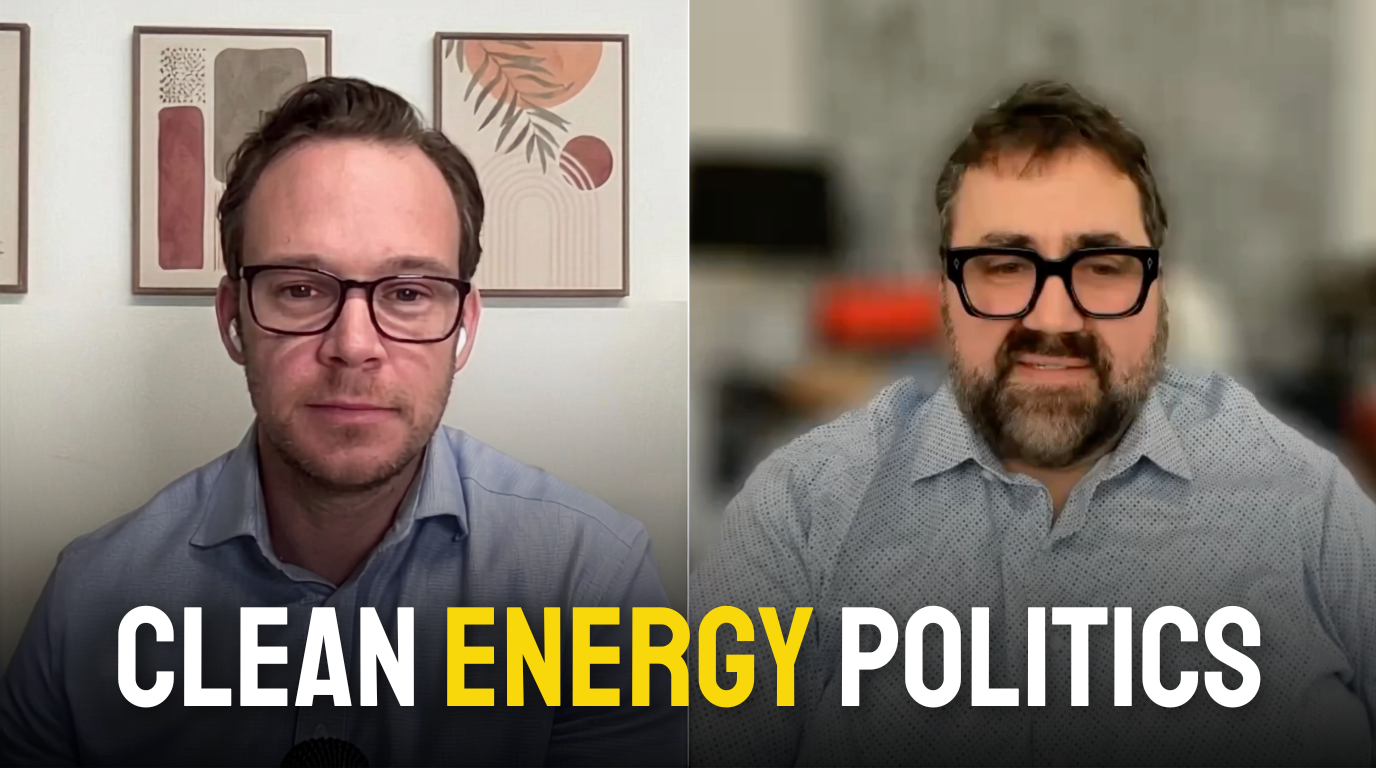
With clean energy tax credits now largely eliminated under President Trump’s One Big Beautiful Bill, a group of renewable energy investors decided to fight back. Not in court or in Congress, but at the ballot box. The Invest in Tomorrow Coalition PAC spent $1.1 million dollars to help defeat Representative Chip Roy in a Texas Republican primary last week, targeting one of the loudest opponents of wind and solar subsidies in Congress.
The coalition says it has $15 million on hand and is already moving into Iowa, potentially going into South Carolina, Arizona, and Florida with a simple message for any candidate thinking about opposing clean energy. You will pay a political price. Today we’re joined by Tom Matzzie, CEO of CleanChoice Energy and the executive leading the Invest in Tomorrow Coalition.
Chris Moyer: So take us back to the beginning. When did this idea first take shape? Was it the moment the big beautiful bill passed? Was it something that you’re already thinking about? How did this come to fruition?
Tom Matzzie: I want to give credit to two other entrepreneurs, Peter Davidson and Brendan Bell at Align Climate Capital, who really took motivation to do this. I had essentially written a thesis that we should be going after the House Freedom Caucus, who really had hurt the industry during the One Big Beautiful Bill fight.
Peter took the initiative initially and drove it. But it really just started with this frustration that we weren’t appealing to people’s political self interest yet. And that’s what we had to do.
CM: So critics say you didn’t mention clean energy once in your ads and that you helped elect someone who also opposes wind and solar. Why is that the wrong way to look at what you accomplished here?
TM: Our job is to create a political deterrence here. And if we’re going into Republican primary and trying to pitch topics and issues that Republican primary voters disagree with us potentially on, that’s not gonna work. We did polling in this case, tested a bunch of different messages, and in this race we found that the biggest impact was [Chip Roy] is not MAGA enough for Texas.
In terms of like who’s on the other side … there weren’t like other choices that were viable. Mayes Middleton and Chip Roy were the most viable candidates in that primary. We’re trying to send a message to the other 434 members of Congress. That’s the important piece here, not just, Chip Roy.
CM: So what’s the when there’s another big vote on clean energy in Congress and there’s a Republican member of Congress thinking about how they’re gonna cast their their vote in the Senate or House, what do you want them to be thinking of this PAC? What do you want going through their head at that moment?
TM: It’s like, if I come after this industry they might put $1 to $2 million dollars into my next election. That’s it. Period. It’s just a real simple math formula. That’s how politicians think. They are primarily about their own political preservation. Every one of them has some issue they care a lot about, you know, but our issue probably isn’t it. And so, the most important thing is then to appeal to their political self interests around getting reelected. That’s the goal, just straight up.
CM: So Texas now behind us, you’ve been engaging in Iowa. I wonder if you could talk a little bit about how you’re working to actually support Congresswoman Mariannette Miller-Meeks. She voted against saving the tax credits in last year’s big bill, but has a more mixed record on clean energy. Could you kind of explain the thought process there with her?
TM: I mean her record actually, she’s the chair of the Republican Climate Caucus, for example, has been historically to support clean energy and support our industries. She’s visited facilities in Iowa, she’s visited solar projects in Iowa, visited with workers in Iowa. It would be politically naive to assume that a Republican member of Congress was going to vote against the president’s tax cut bill. Like that’s that’s what Republicans do. They’re supposed to go vote for the tax cut bill every year, right?
So that was always going to happen. What was going on though is there’s a tug of war inside the Republican caucus between allies of the industry and then these extremists in the House Freedom Caucus who wanted to kill our industry. And she’s an important part of that tug of war and we need to support her because she’s going to be there potentially in the future.
CM: And so how do you think about the general election in what will be a very contested seat that could determine the majority in the in the House?
TM: One other thing actually about the primary, she’s running against the chief NIMBY in her district who like organizes against solar projects and wind projects. So that’s actually a very important contrast. That when we see these like big NIMBY opponents of wind and solar try to rise politically, we need to intervene to stop them as well. As for the general election, we’re reserving our decision about that investment in that race for now. We’re not making a decision yet.
CM: So reportedly there’s $15 million you all have been able to raise for this effort and to go to other places. Is there anything that you can share about the other races that you might be looking at this cycle?
TM: So the first thing is, there were 38 Republicans who signed this repeal everything letter on June 6 of last year, right before the One Big Beautiful Bill. They’re on our list, right? Whatever their next race is for the rest of their career, we’ll be paying attention. And that’s like a very important piece here. Right now you have Ralph Norman, former chair of the House Solar Caucus, by the way, who really knifed the industry. Nancy Mace, they’re in a Republican primary in South Carolina for the governor’s race. If one of them is in the runoff, we’ll probably get involved.
And we’re looking at other races that have similar narrative value. I mean, that’s the important piece here is it’s about the story around the industry and whether or not we’re strong or weak. Are we a lion or gazelle? That’s it. And if we’re successful, the story is the industry will fight back if you come at us in an unfair way. And be perfectly clear, disagreements are not necessarily unfair. Like you we can have disagreements over policy.
But the House Freedom Caucus went out of their way to hurt us as an industry, to hurt our workers, our investments, our businesses. That’s very different.
CM: It’s been refreshing to hear someone approach this with a realistic viewpoint from the clean energy perspective. Obviously fossil fuels outspend this industry 200:1 in the last cycle. You know, what’s the message that you want clean energy developers watching this to do differently as they think about, and as you think about building the industry’s political power?
TM: I mean, the most important thing for people to understand is political risk is an investment risk. You have to look at your all the risk mitigations you do around project costs, around cost of capital, around labor costs, all sorts of different things. Then you have to now add to that political risk is one of the things that you should be thinking about how you invest in to address. Smarter developers are already doing this to some extent. But we haven’t done in our industry, while we’ve supported friends, we haven’t done the accountability work historically. And that’s what is different about our contribution here, is we’re doing the accountability work now also.
CM: And I imagine this is something that you see hopefully, if there’s support from the industry growing in the next several cycles. Is that fair to say?
TM: I want to achieve nine figures of budget, over $100 million available for the industry to defend itself. I want us to play both federally as well as in statewide and state legislative races. These state legislators who are proposing bans on renewable energy development in a few states out west that’s going to drive up cost for consumers. That’s going to drive up the cost for businesses. They should be held accountable or persuaded to do something differently.
CM: Our last question is what’s something about you, either professionally or personally, that might surprise our audience?
TM: Something might surprise people. I’m not someone who actually really likes politics. I practiced politics professionally as an operative and campaigner for 15 years and I’m happily doing it now because I care about our industry deeply. But I’m not someone who actually likes politics. I’m a much nicer person in real life than I manifest as a political operative.
Check out our recent conversations:
WATCH: Solar’s Journey From ‘Brink of Extinction’ to Manufacturing Renaissance
Echo’s Interview with Gov. Wes Moore
WATCH: Mike O’Connor on the Mountain West Geothermal Consortium & the Case for Faster Deployment
Sign up for our newsletter
Receive updates on our work, industry news, and more.